°Brix
Degrees Brix indicate the amount of dissolved solids in the water, largely natural sugars. The higher the value, the sweeter the coconut water.
Green and mature coconut · Russas - CE
Grown, harvested and selected by W&J Agro in Russas - CE, with quality measured in a laboratory.
Controlled origin
Three farms of our own in Russas - CE, same region, same care.
The farms
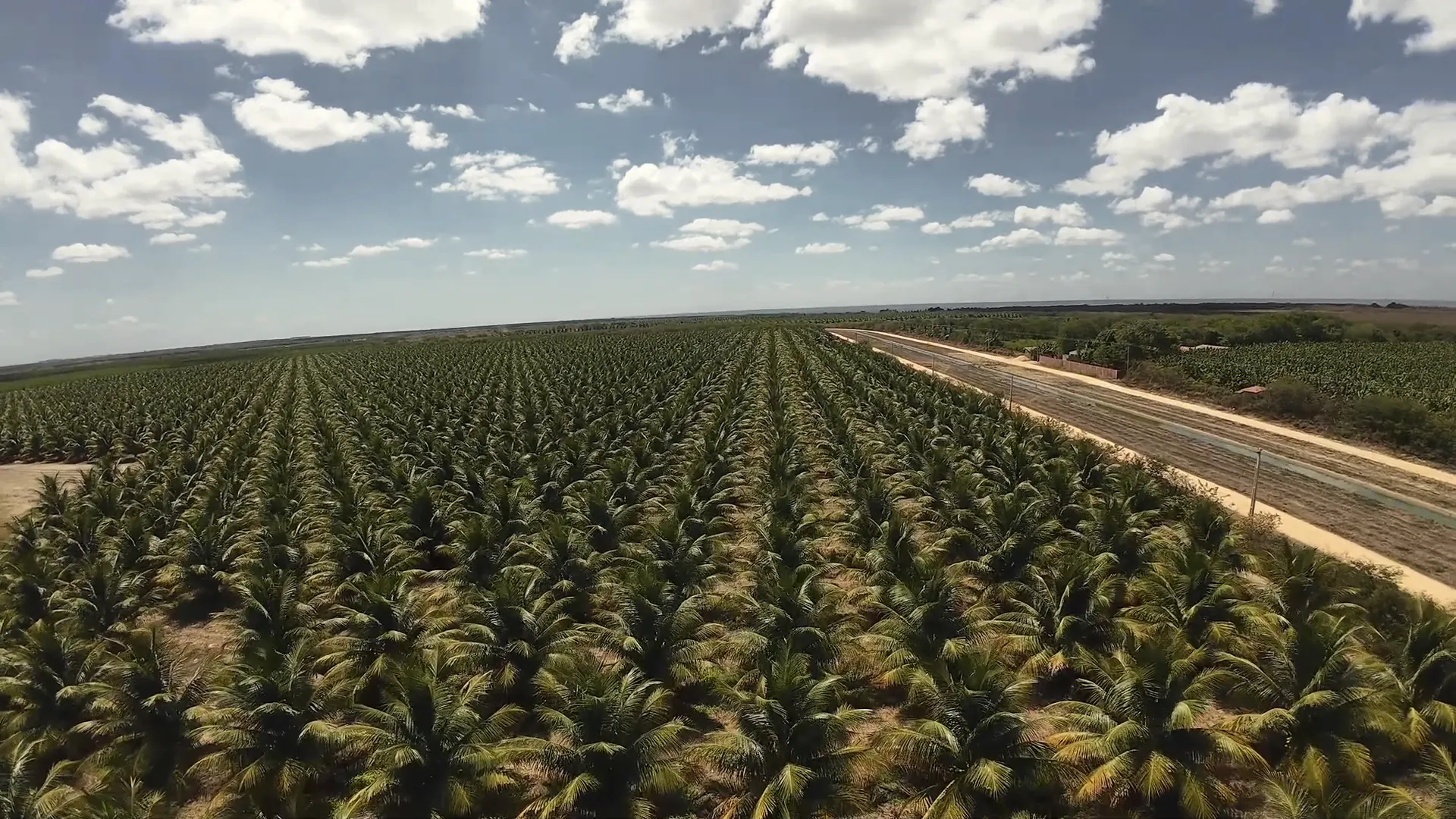
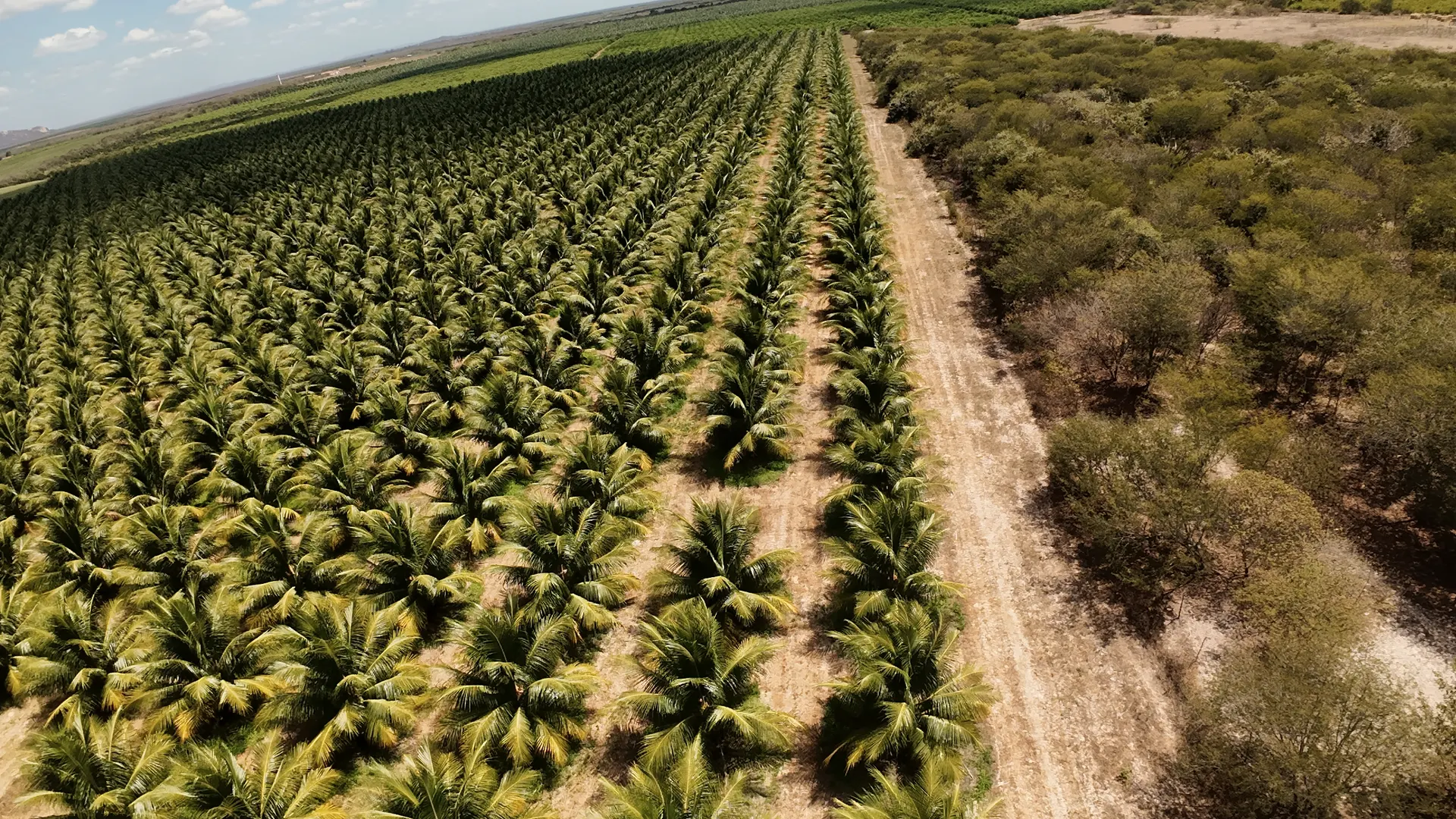
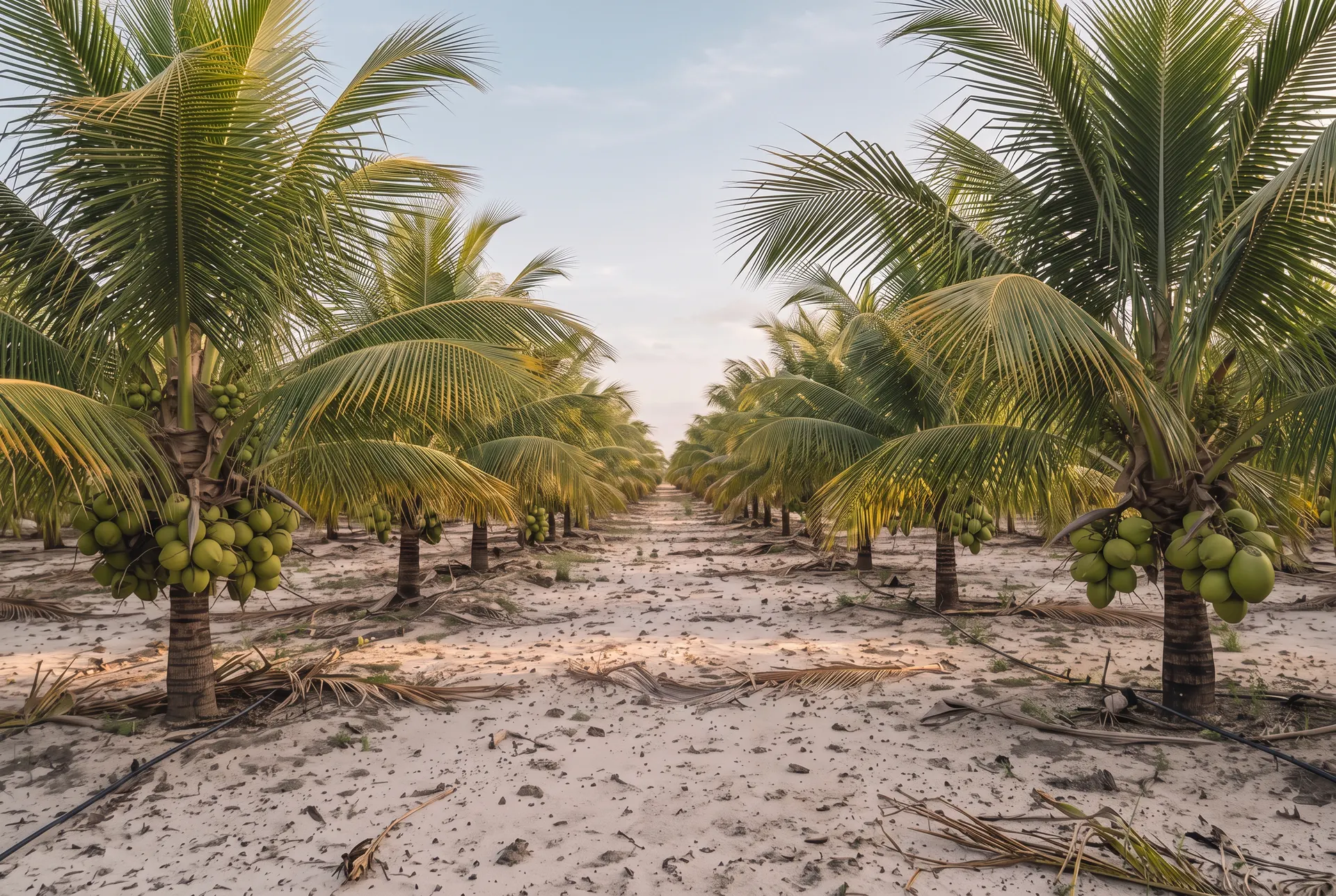
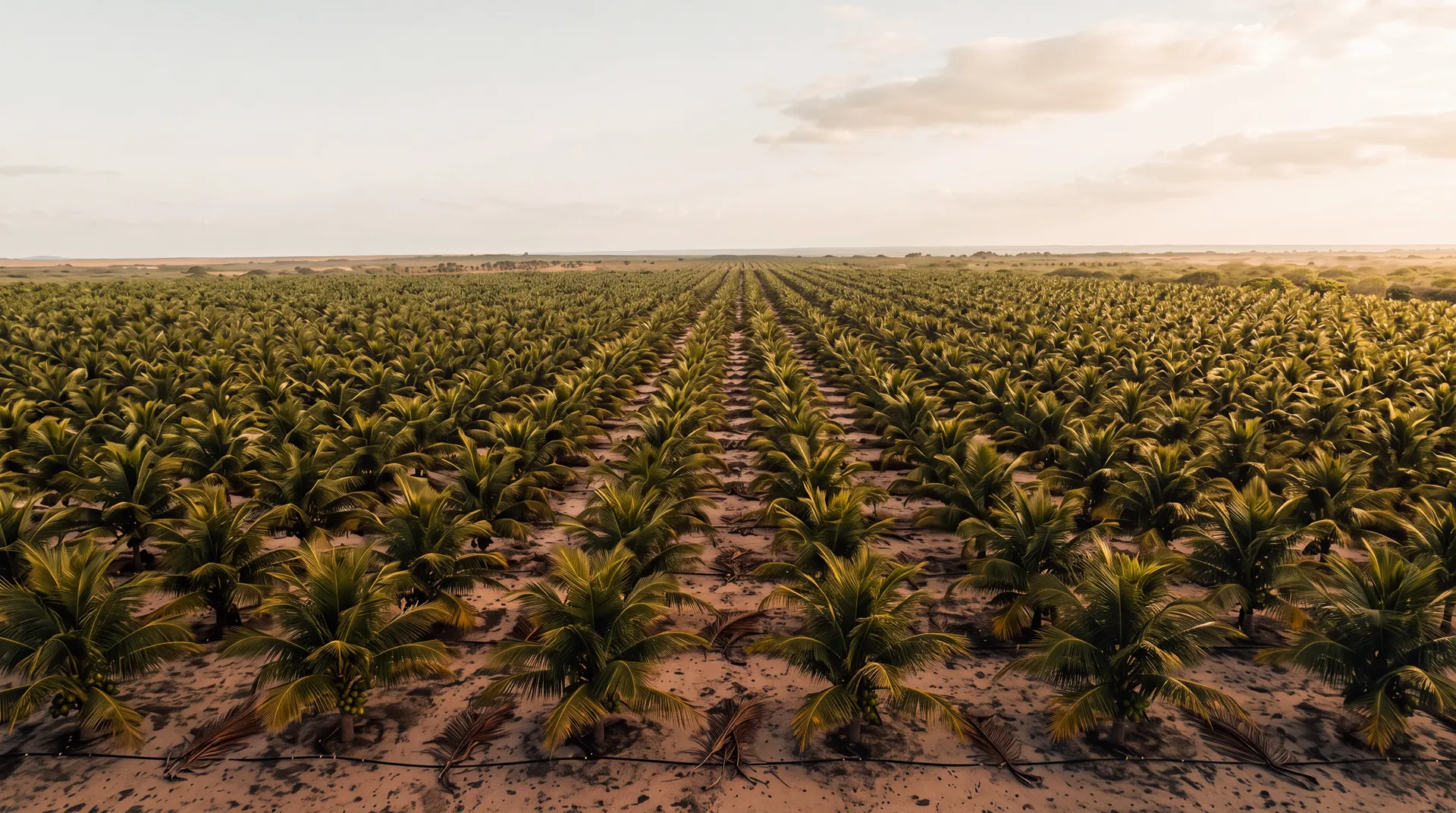
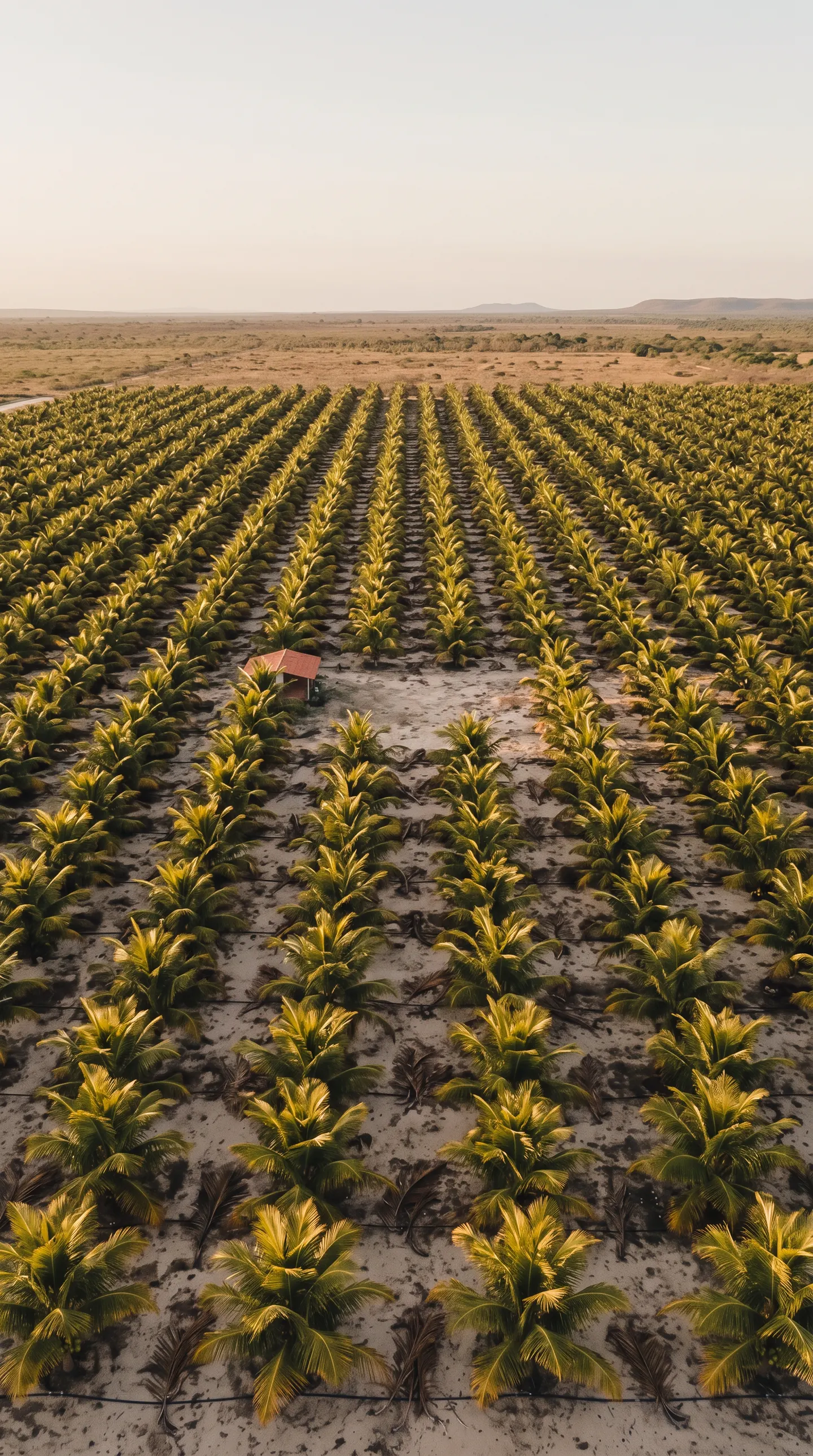
W&J Agro's three farms are in Russas - CE, in the same region. For buyers, that means a single origin to trace. In the areas in production, growing and harvesting are handled by the company itself, to the same standard later measured in the laboratory.
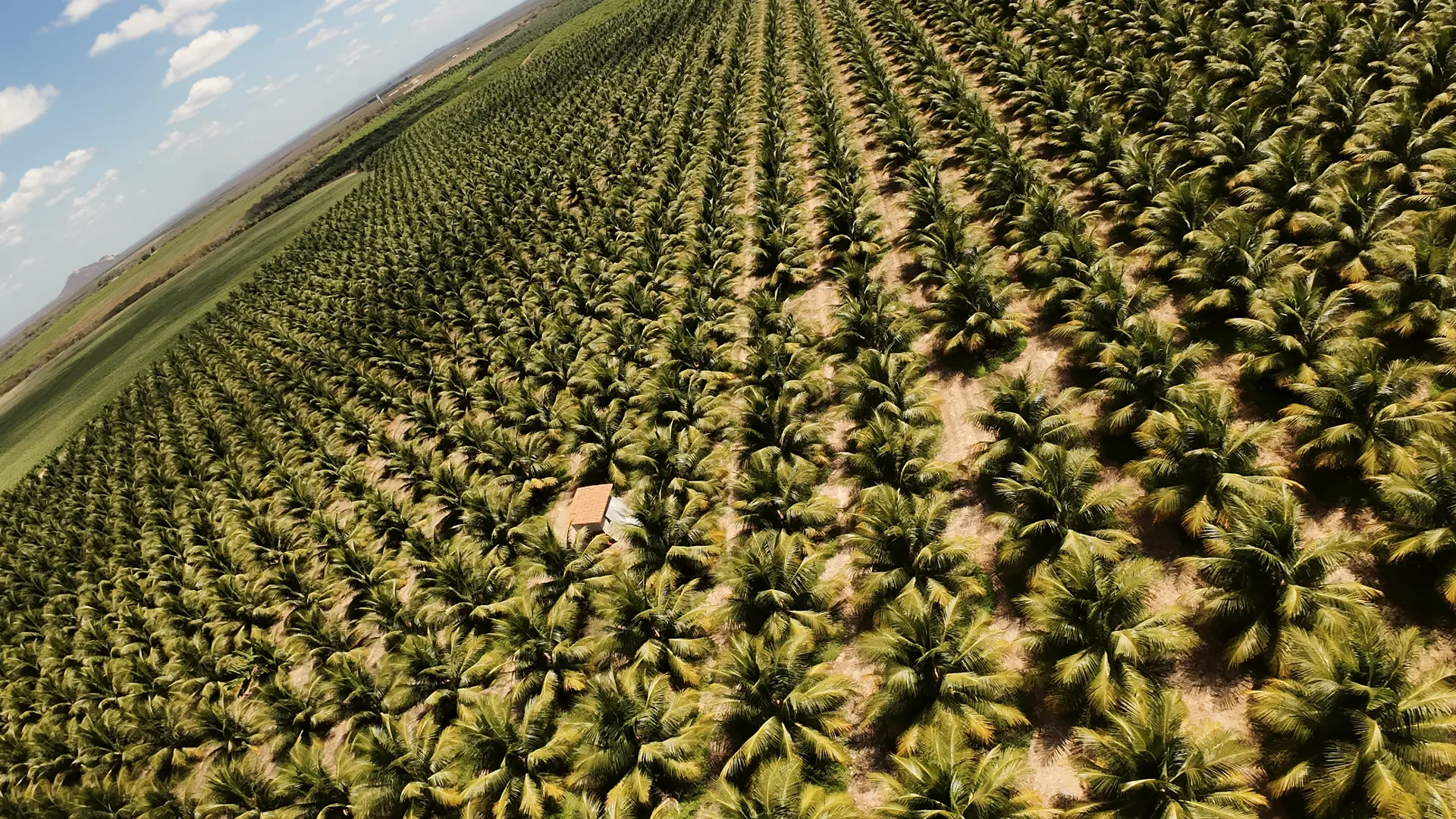
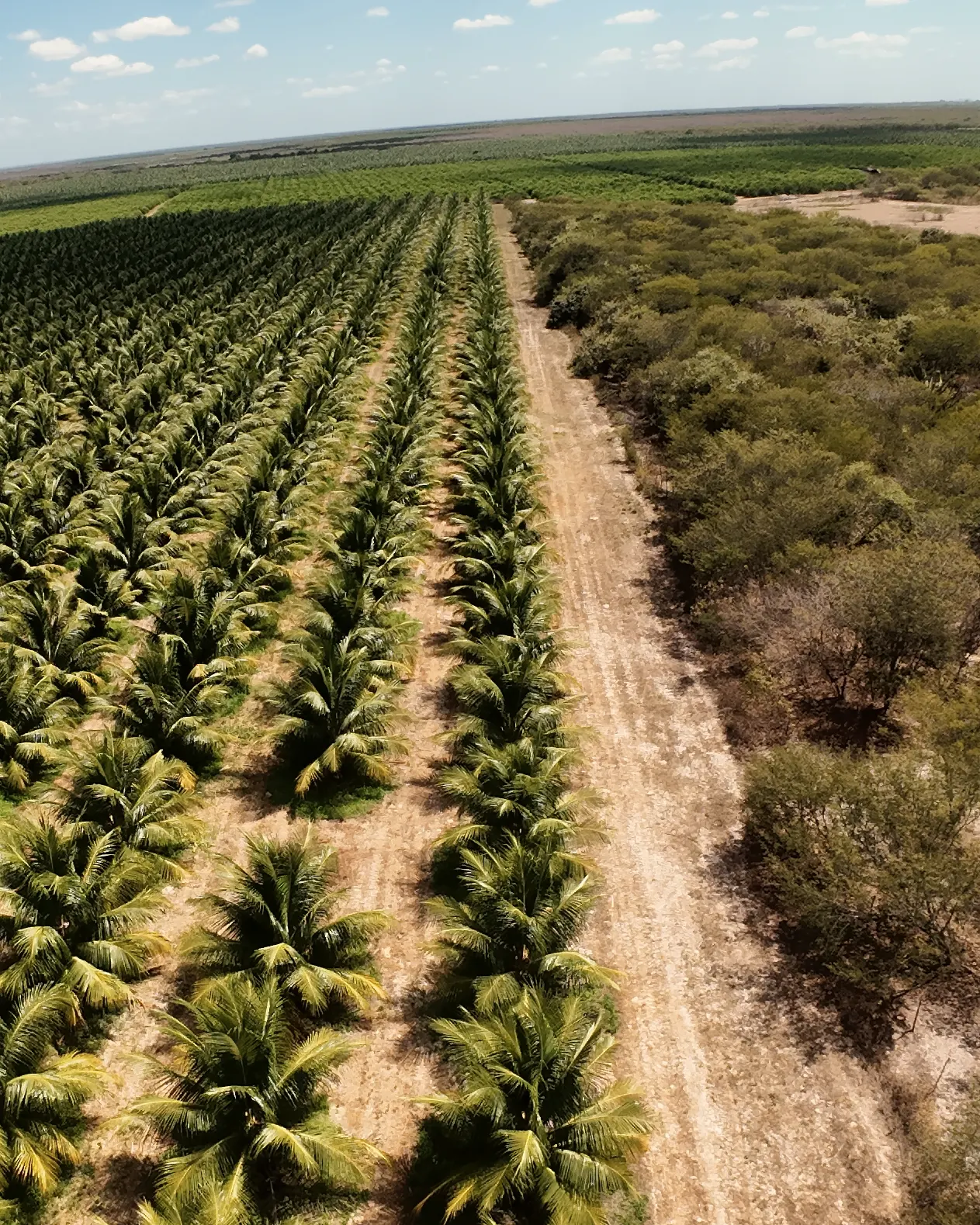
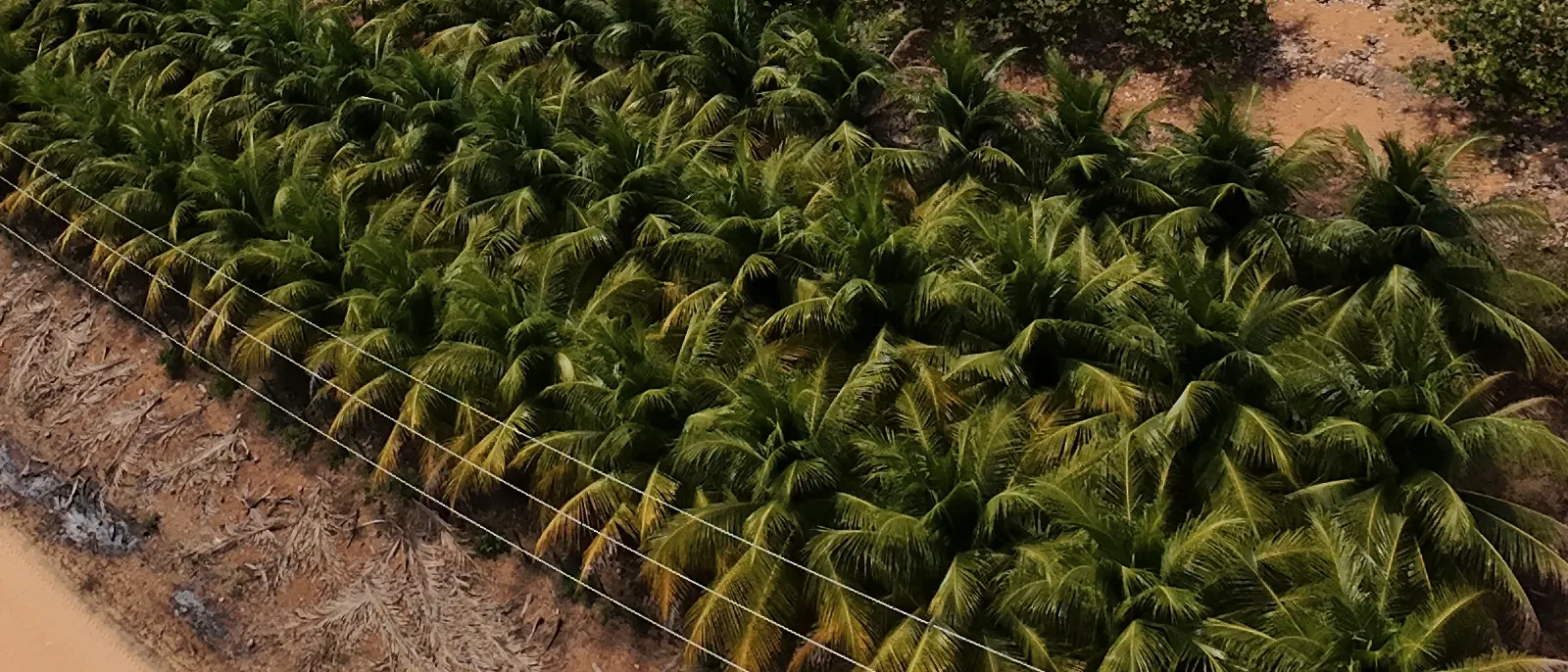
W&J Agro's first area, with rows of dwarf coconut palms, grown and harvested by the company itself.
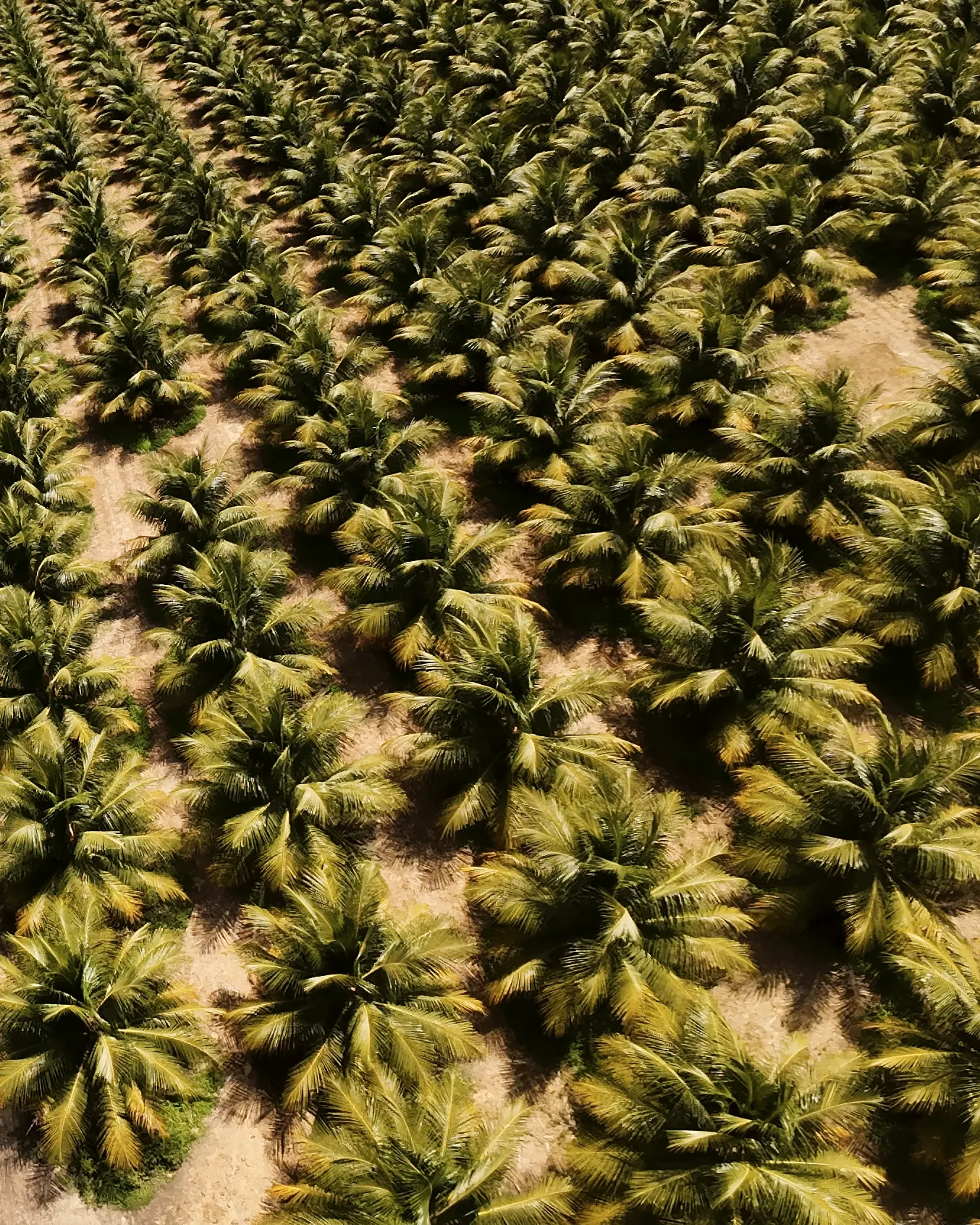
The second area, in the same region, under the same management and harvested by the company itself.
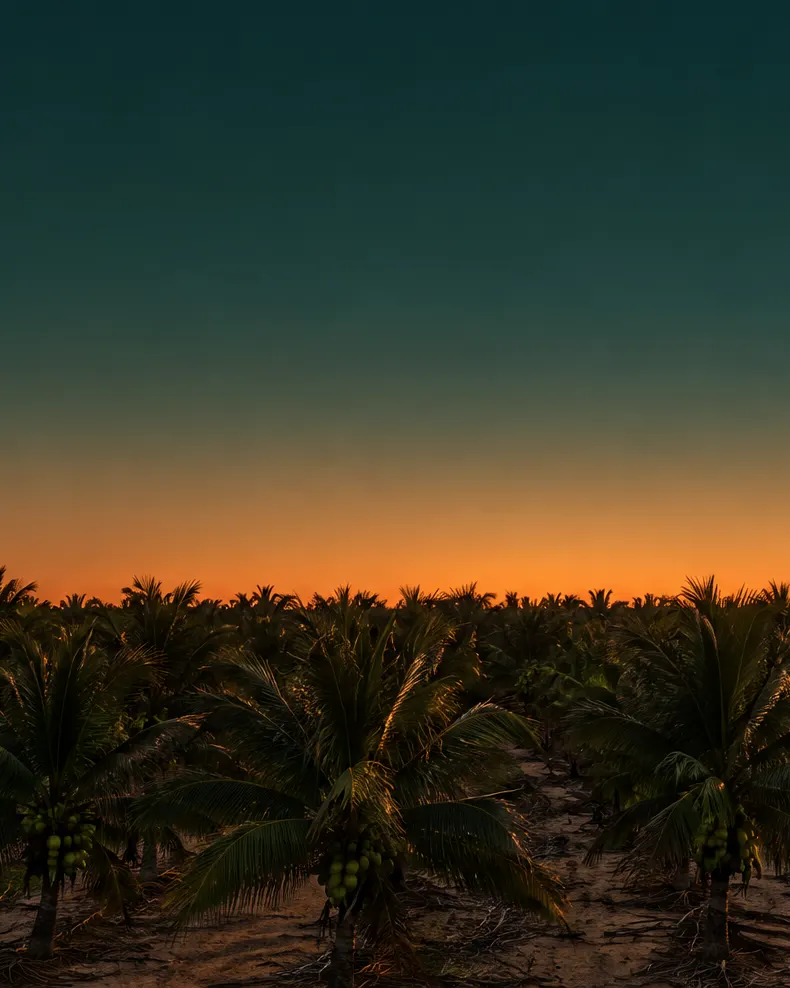
W&J Agro's newest area, already in production and kept to the same standard as the other two.
From cultivation to shipping
Every step has the same goal: a fruit that does not crack, overheat or wait too long. That is what preserves the coconut water. The harvest rule that sums it up: the bunch is lowered by hand and never touches the ground.
01
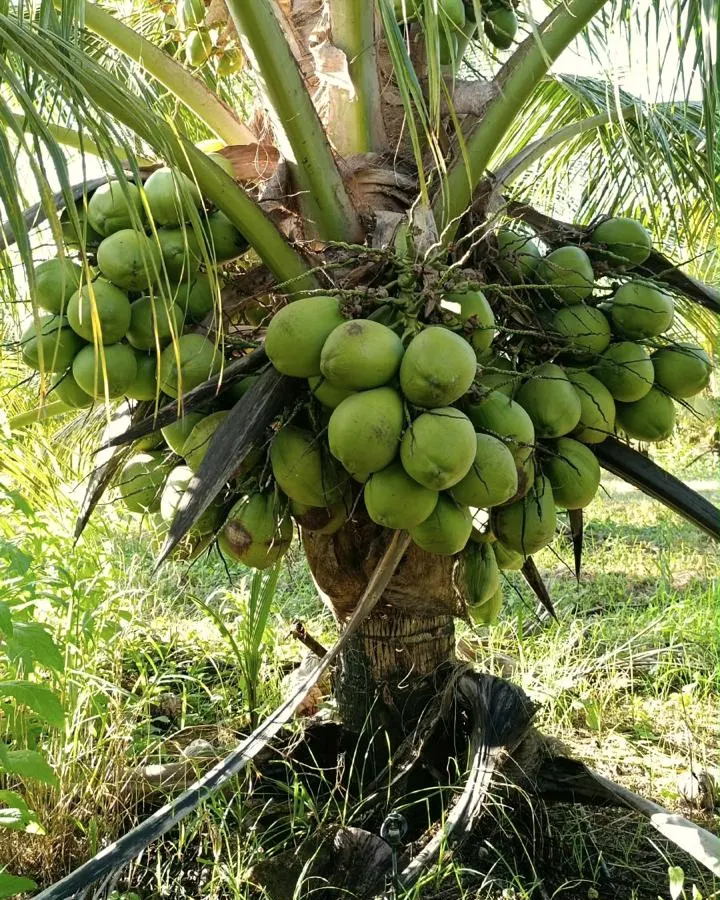
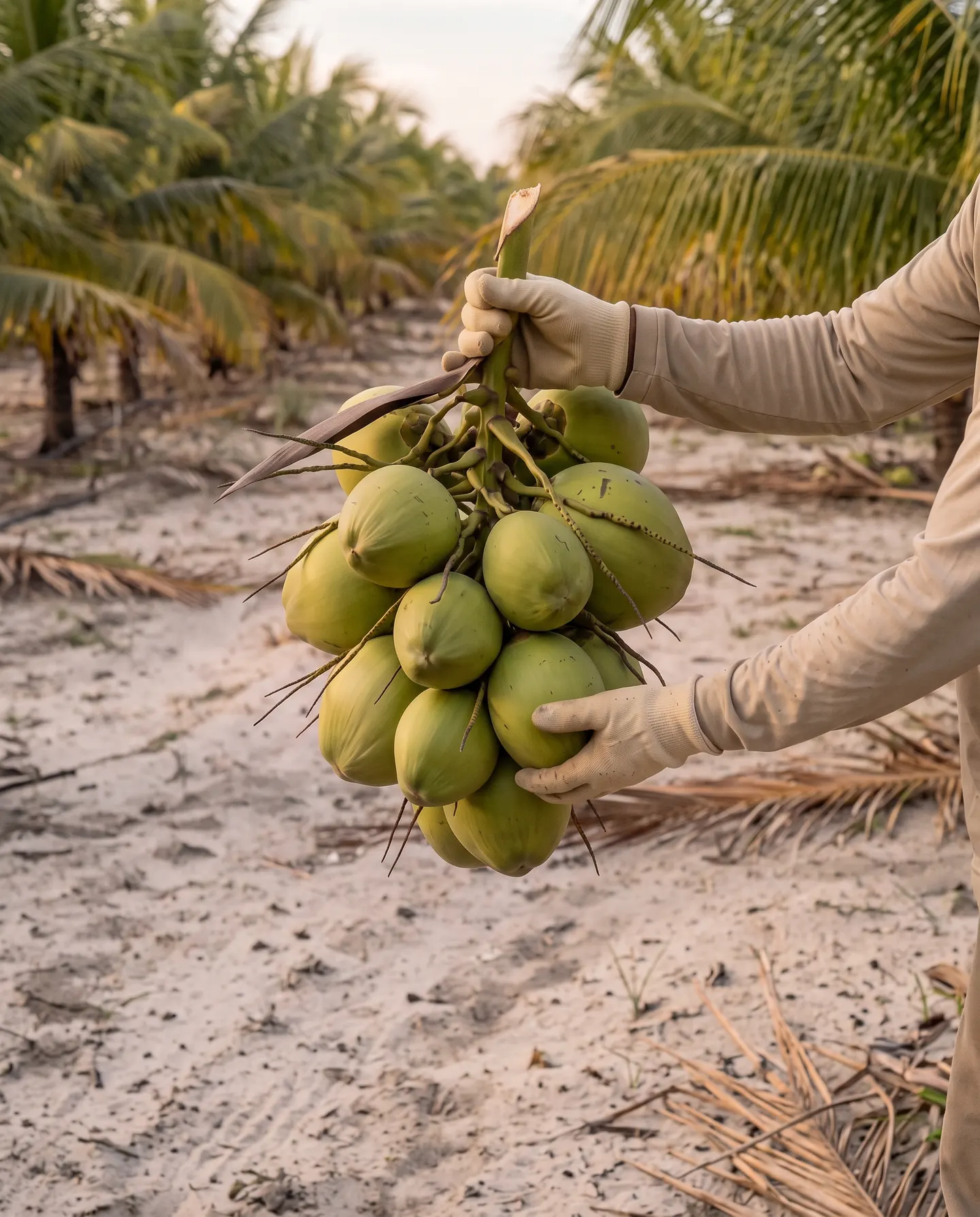
A coconut palm starts producing at around 3 years old. After that, one bunch a month, with about 15 coconuts ready for consumption. On dwarf palms the bunches hang low and are harvested from the ground, without a ladder.
02
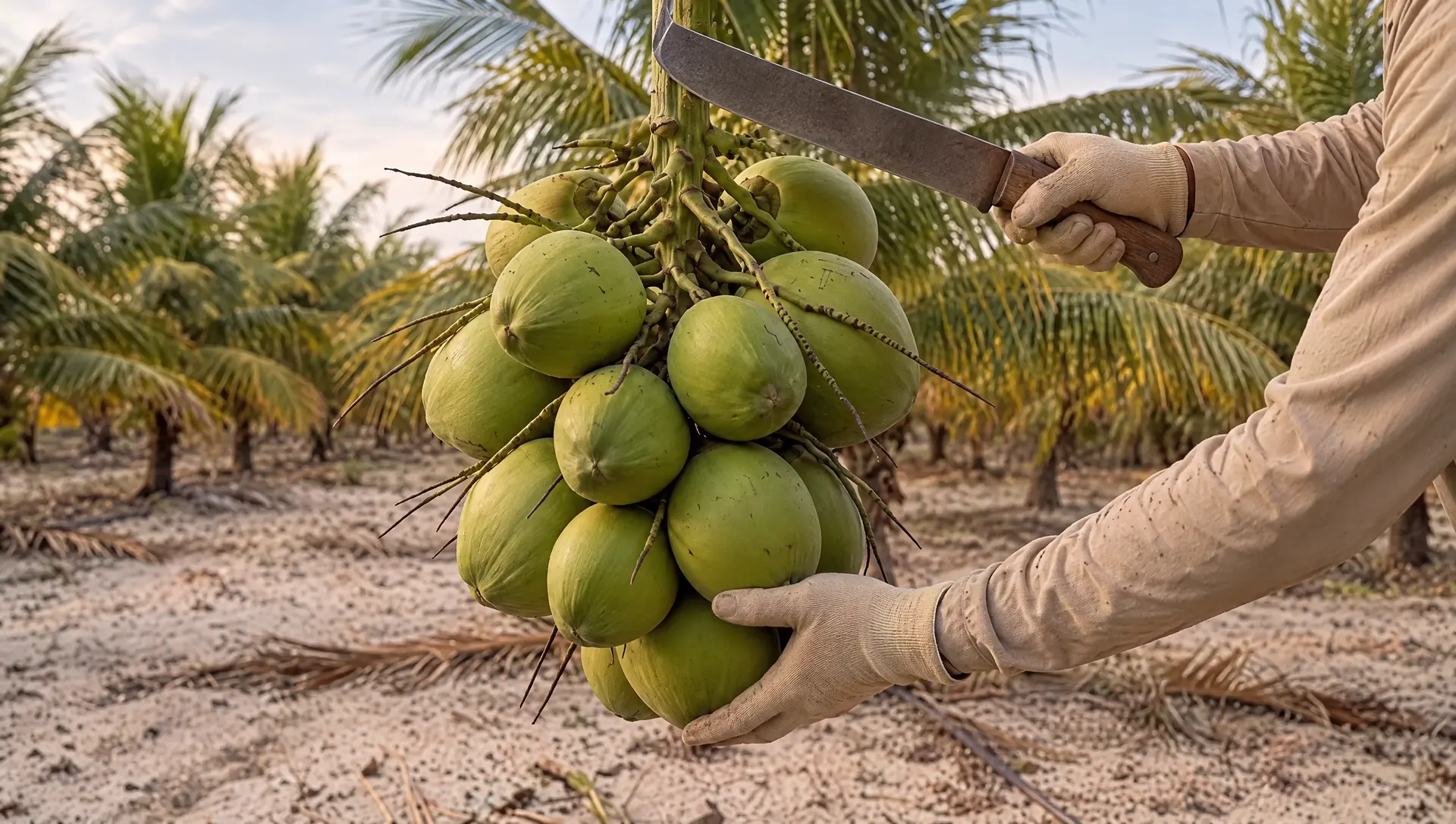
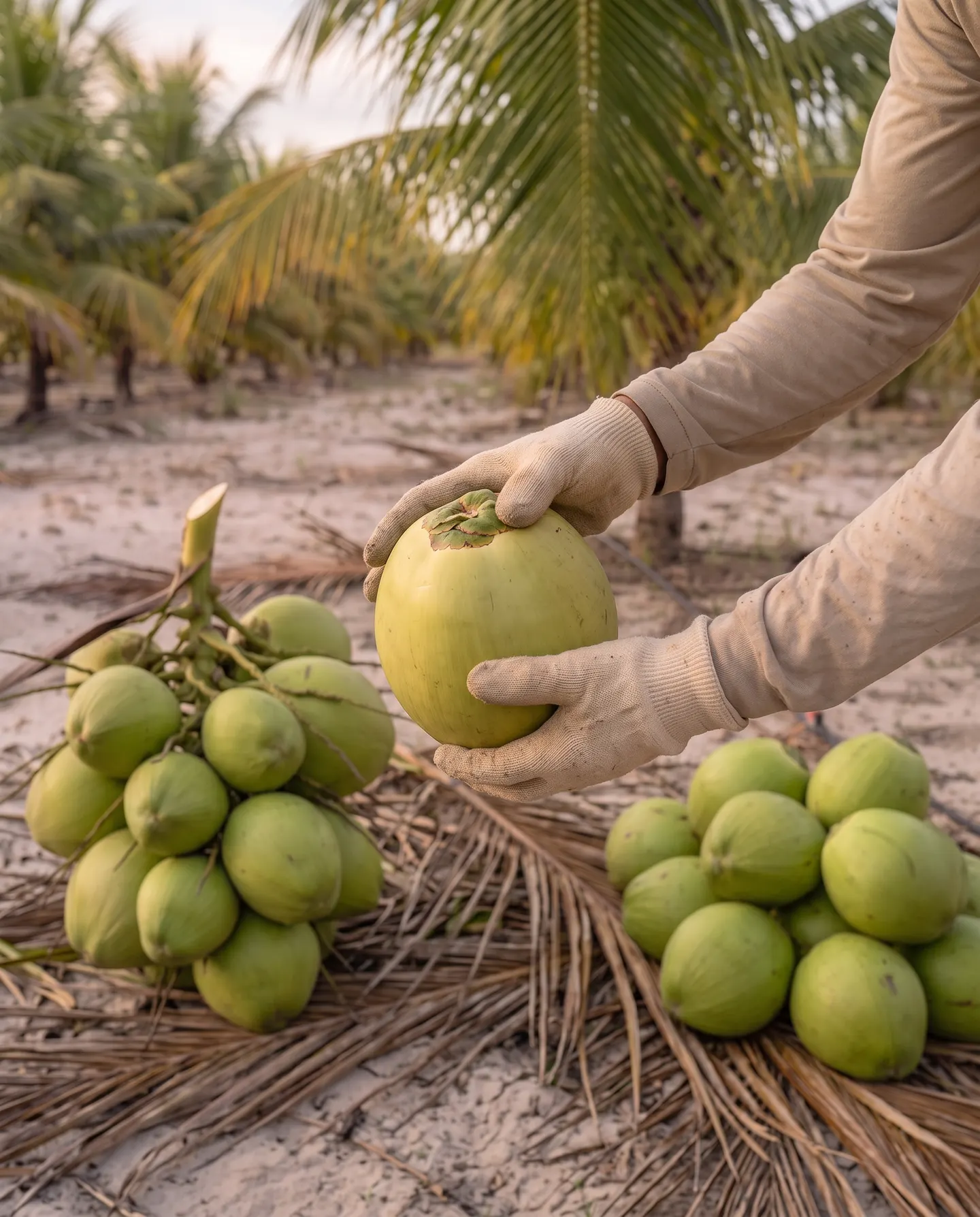
The whole bunch is cut within arm's reach, with a machete or a long-handled sickle. One hand supports the bunch during the cut and it comes down without touching the ground: a fall cracks the coconut and compromises the water.
03
Right after cutting, the bunches are kept in the shade. The coconuts are separated from the bunch and graded by size and appearance. Any outside the standard are discarded.
04
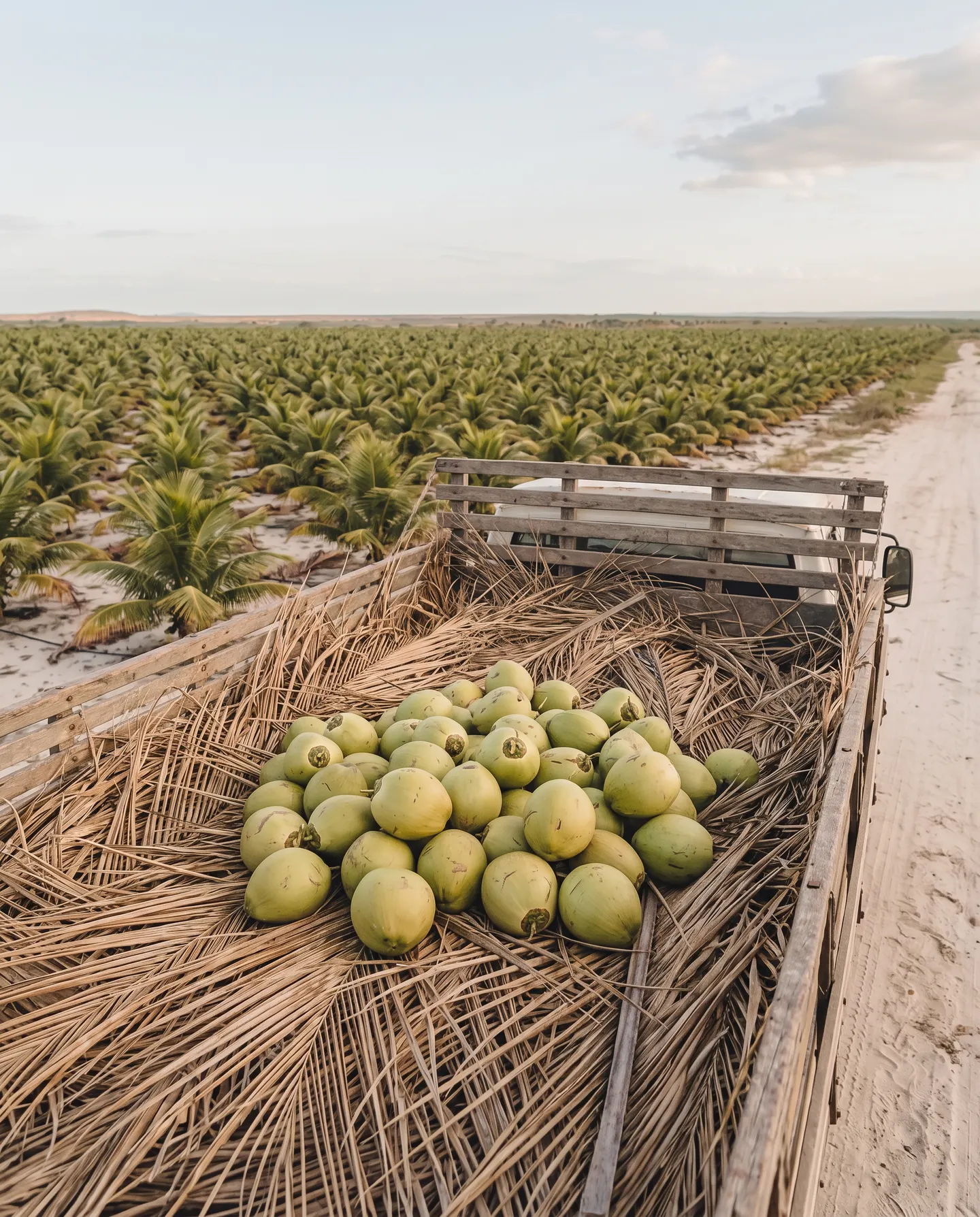
Short storage in a cool place until shipment. Transport is in a truck lined with straw or leaves, to protect the fruit along the way. For smaller sales, the coconuts go in raffia sacks.
Green coconut and mature coconut
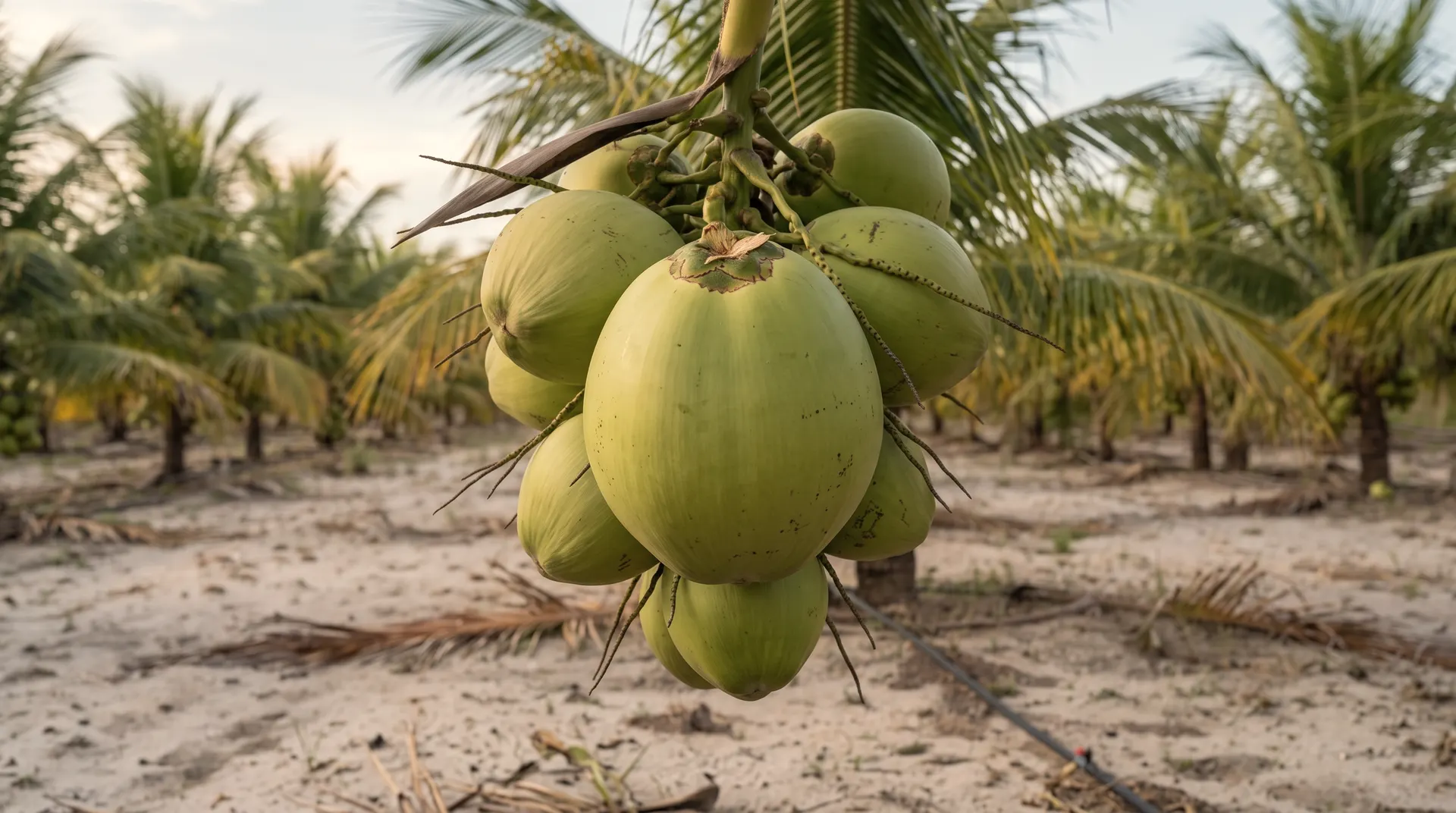
The two are nearly identical: same color, smooth husk, brown calyx. The difference is the harvest point. The mature coconut is the fruit at its peak, heavier and with the most water. The green coconut is picked a little earlier.
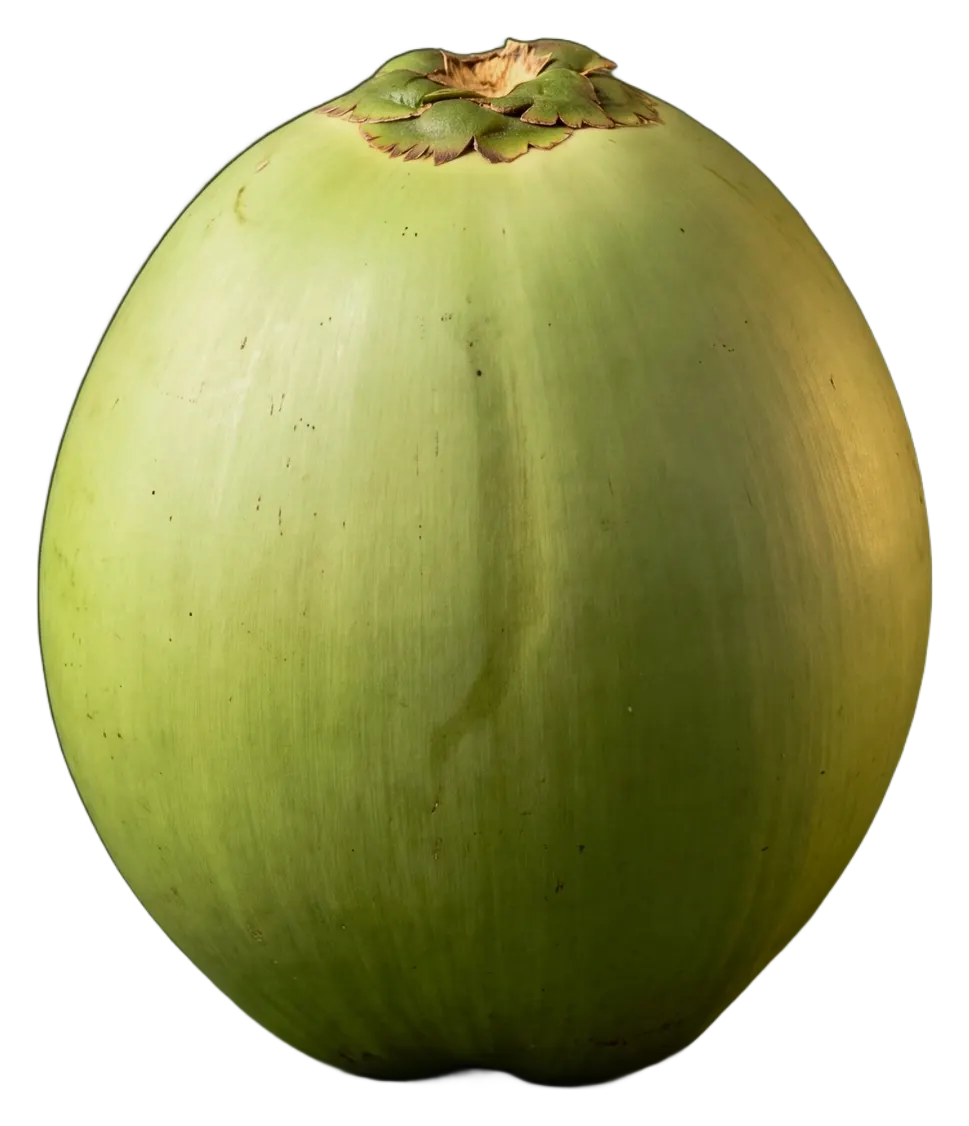
Picked a little before its peak. Almost identical to the mature coconut on the outside, only slightly smaller. A lighter option, with the same origin and the same selection process.
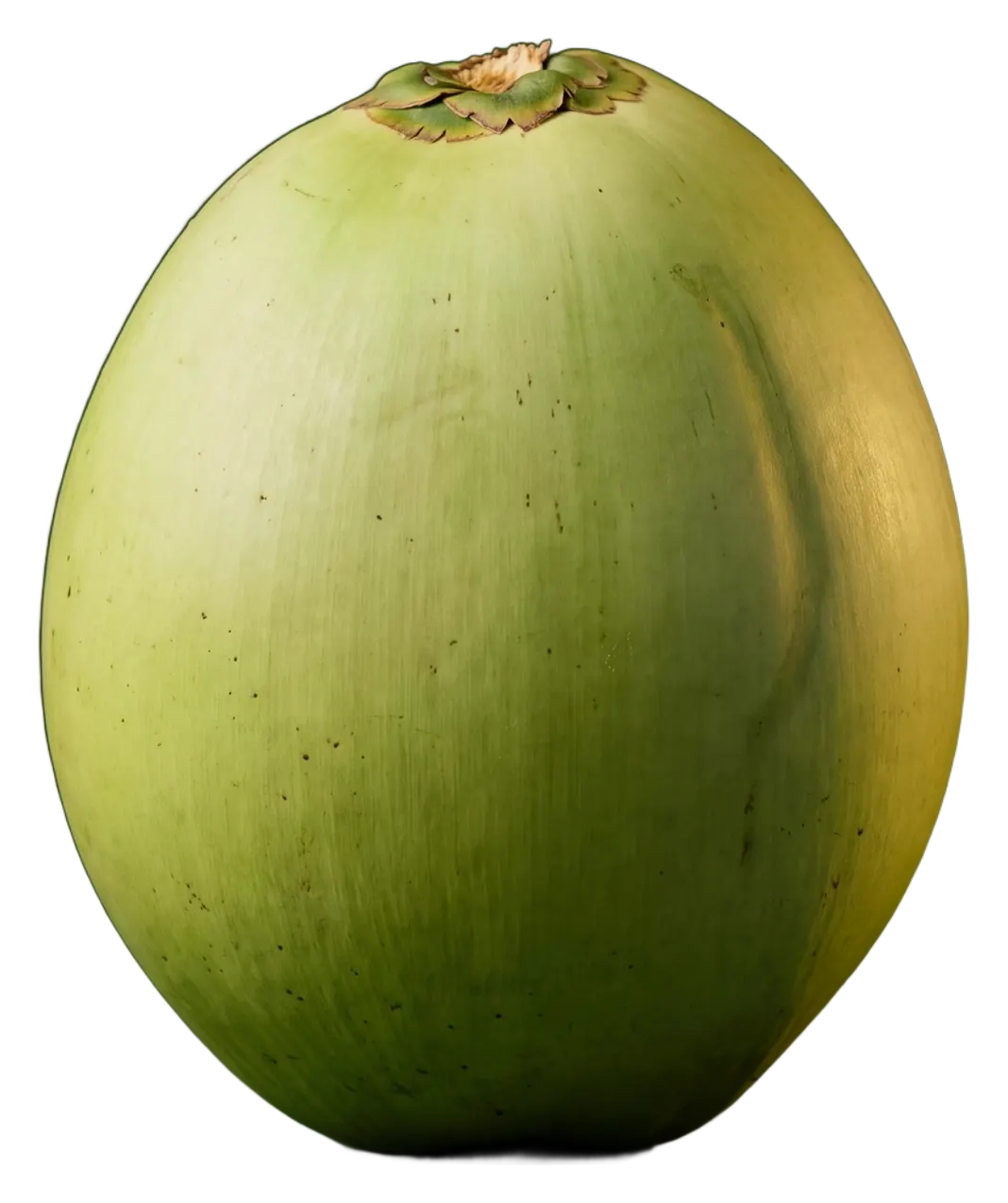
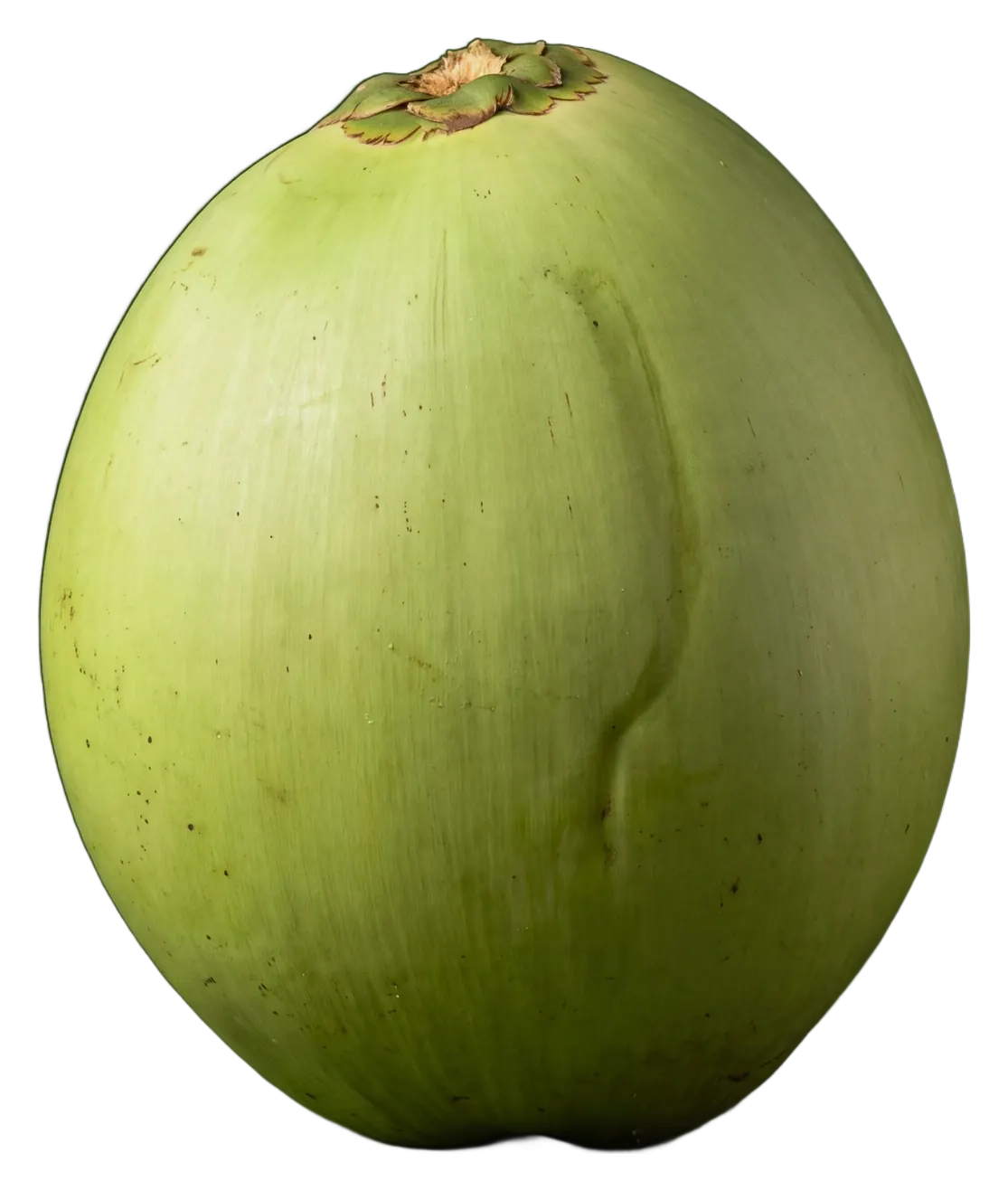
The coconut at its peak, W&J Agro's standard. Larger, fuller and heavier, with a firm, uniform green husk. Maximum water: 600 to 700 ml per coconut.
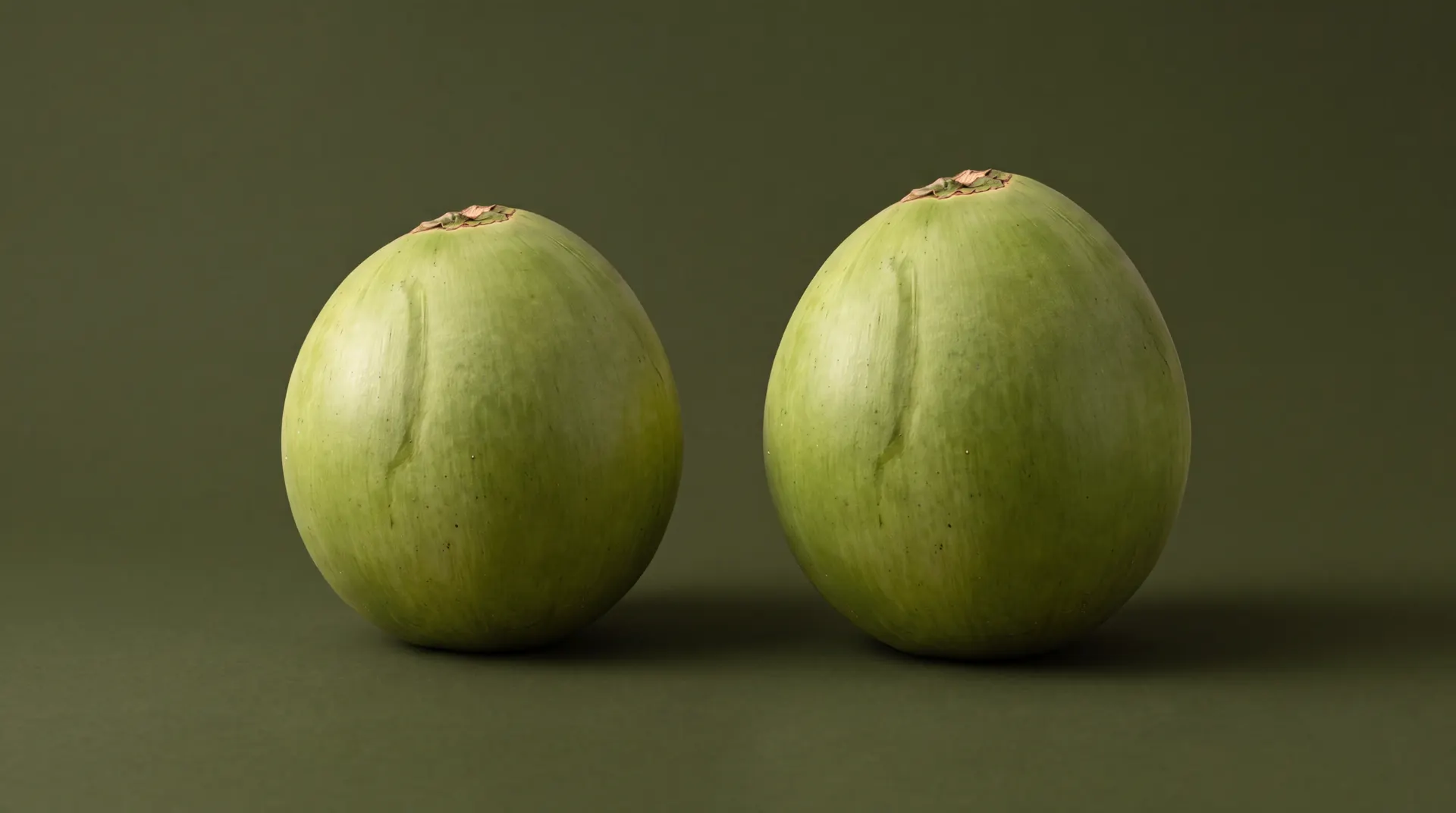
Most of the production goes to coconut water for drinking. The mature coconut, picked at its peak, yields the most water per fruit.
The coconut is also supplied to companies that use the whole fruit for various purposes. The same origin and selection standard applies to both uses.
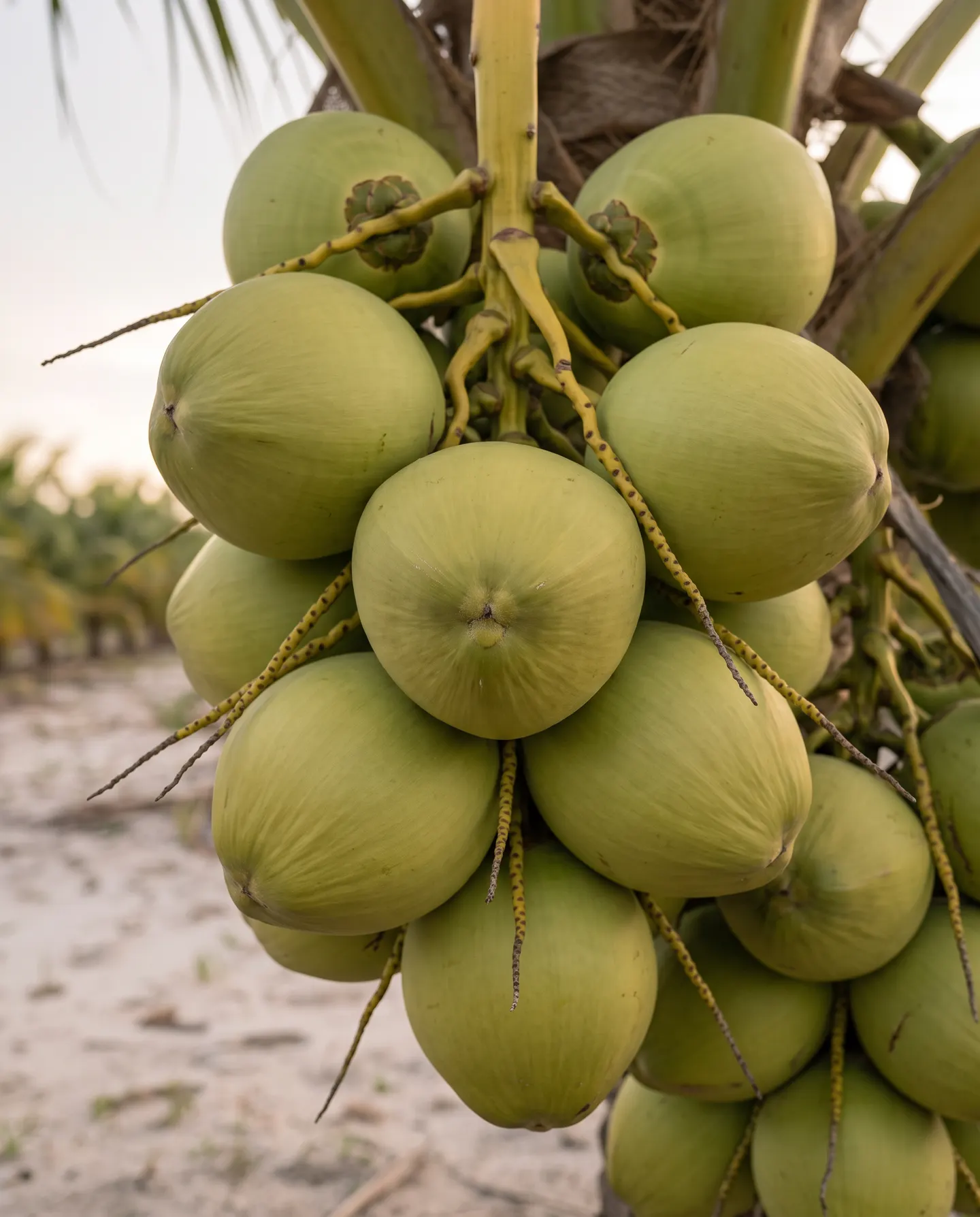
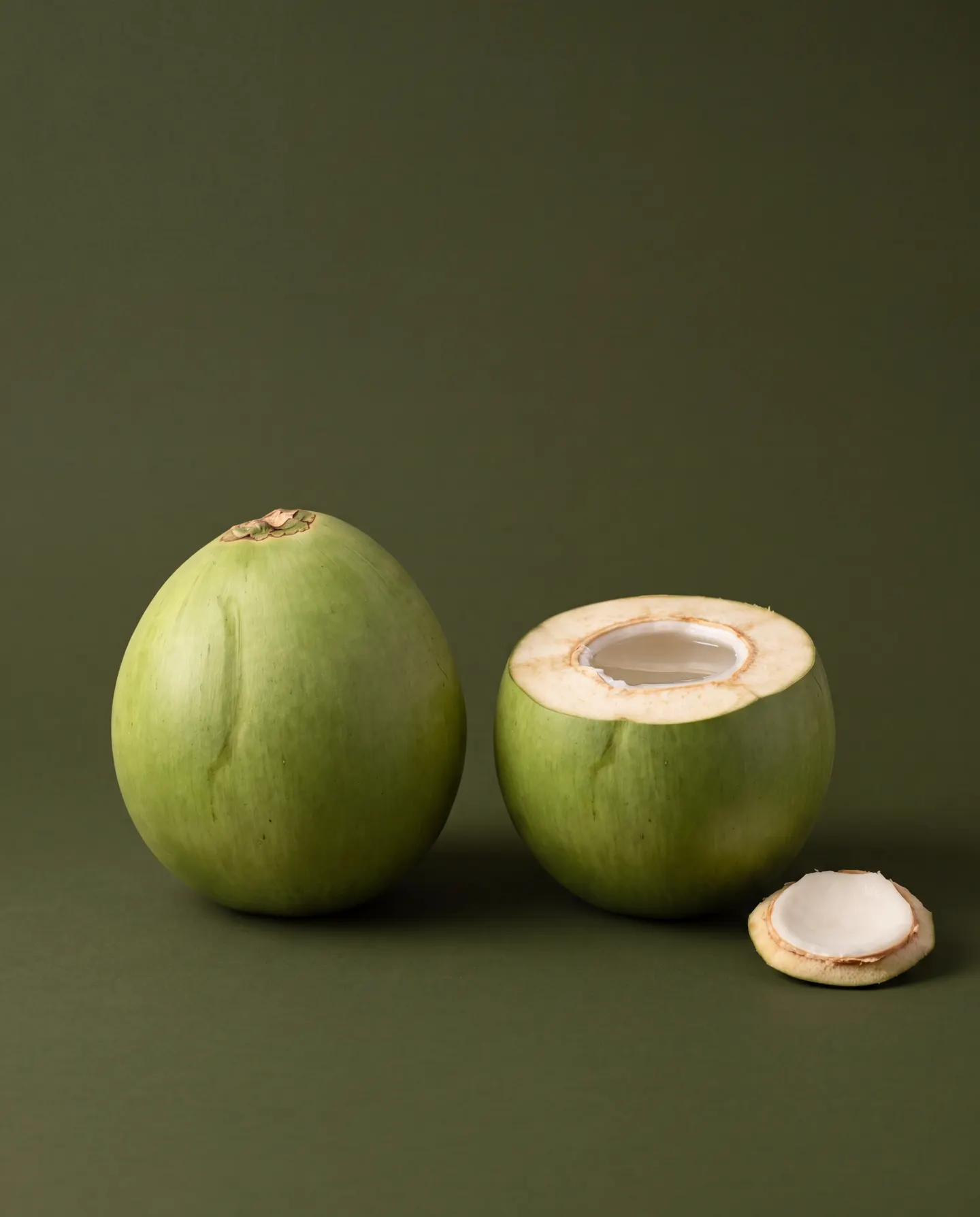
Cut open, the coconut reveals translucent water and white flesh. This is the water measured in °Brix.
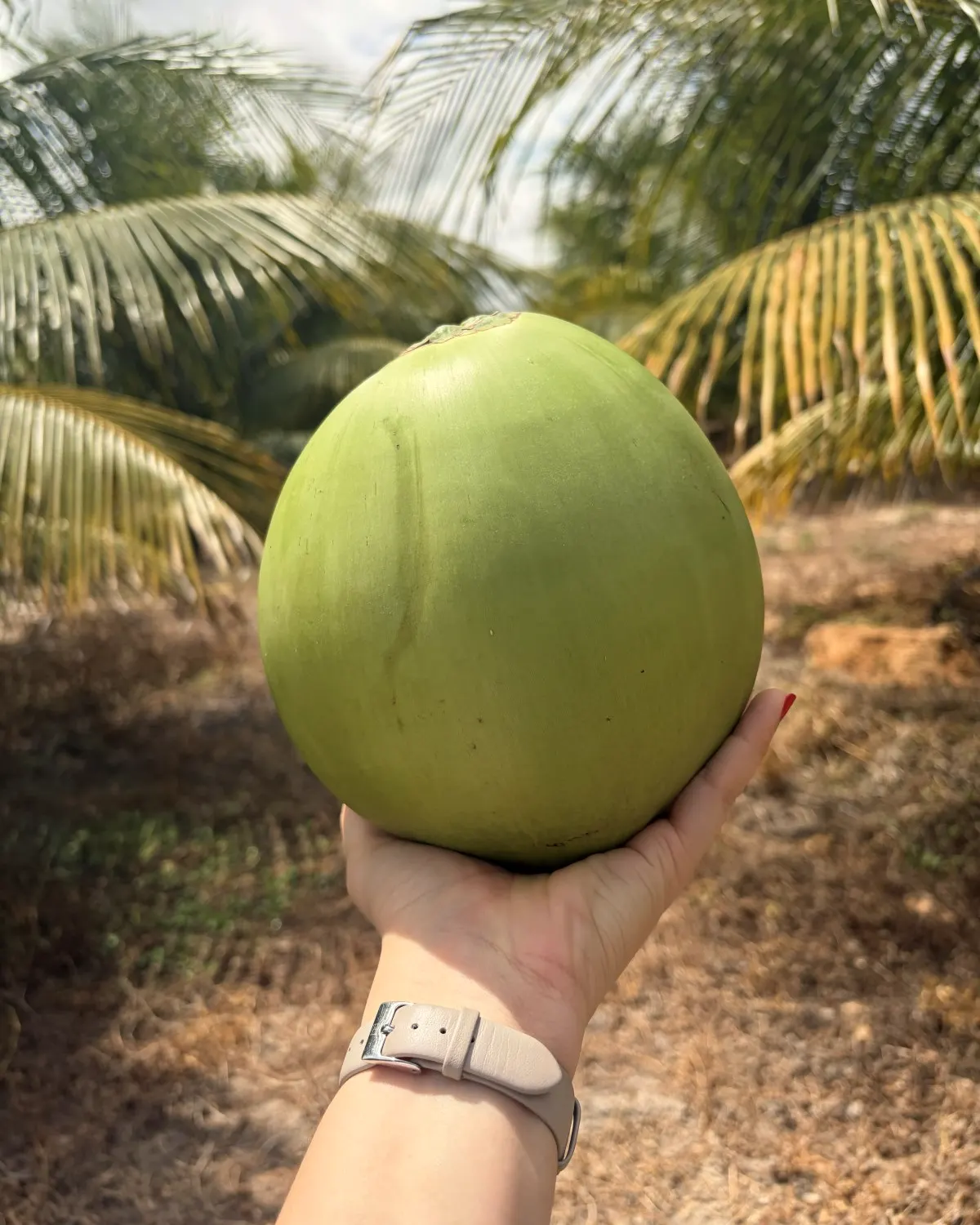
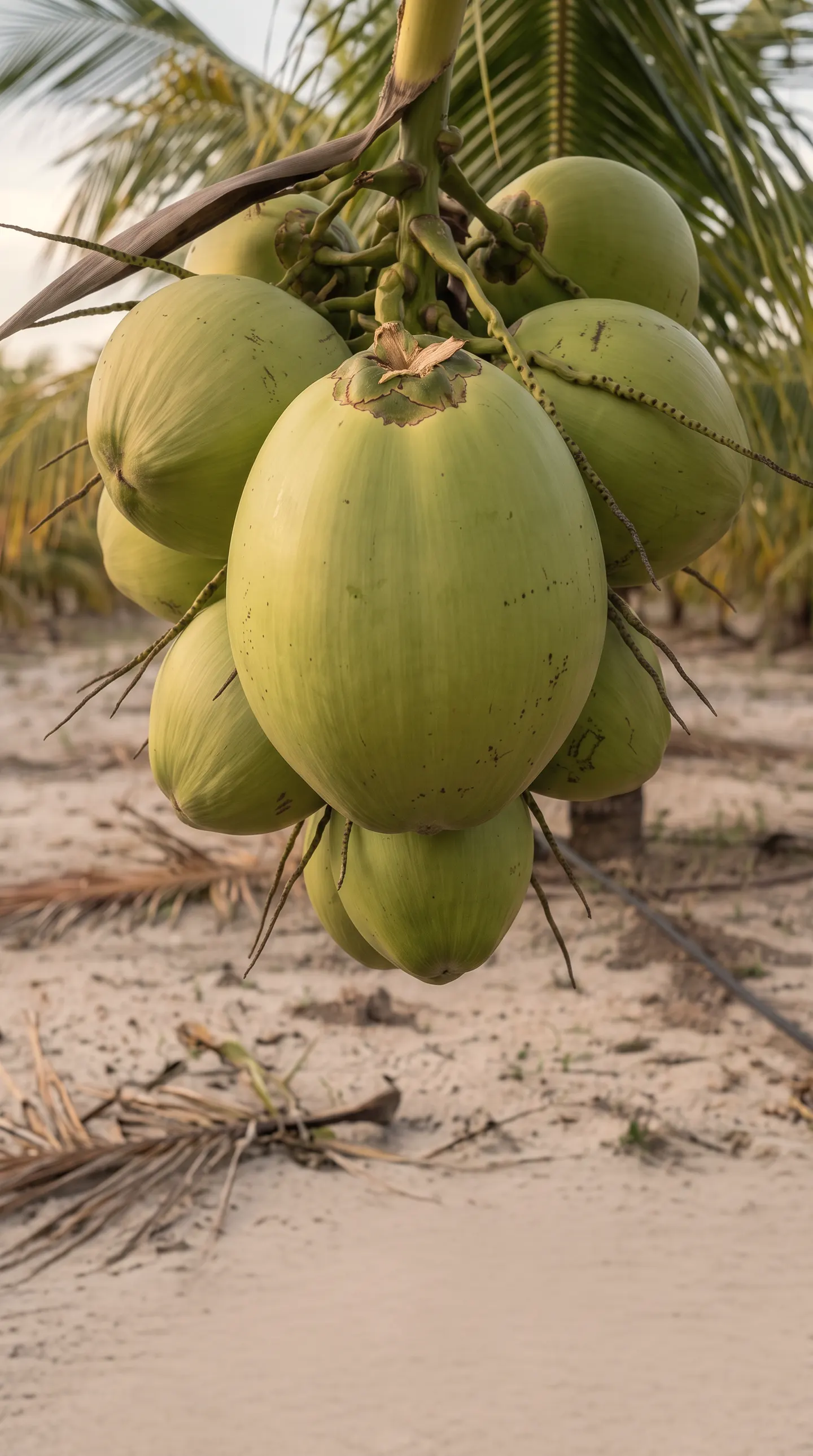
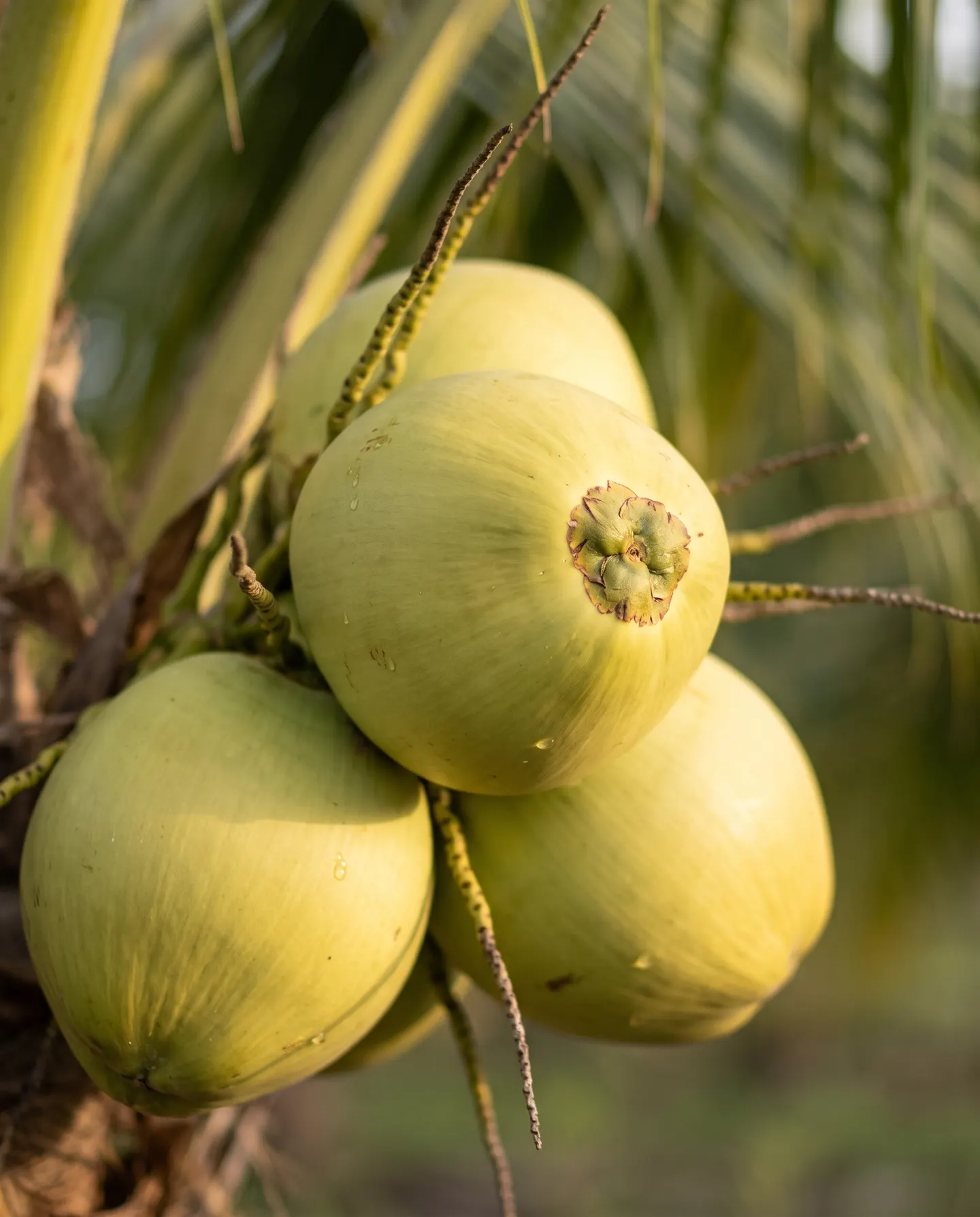
It fits in the palm of an adult hand. Smooth, matte husk, light green, with a gentle groove.
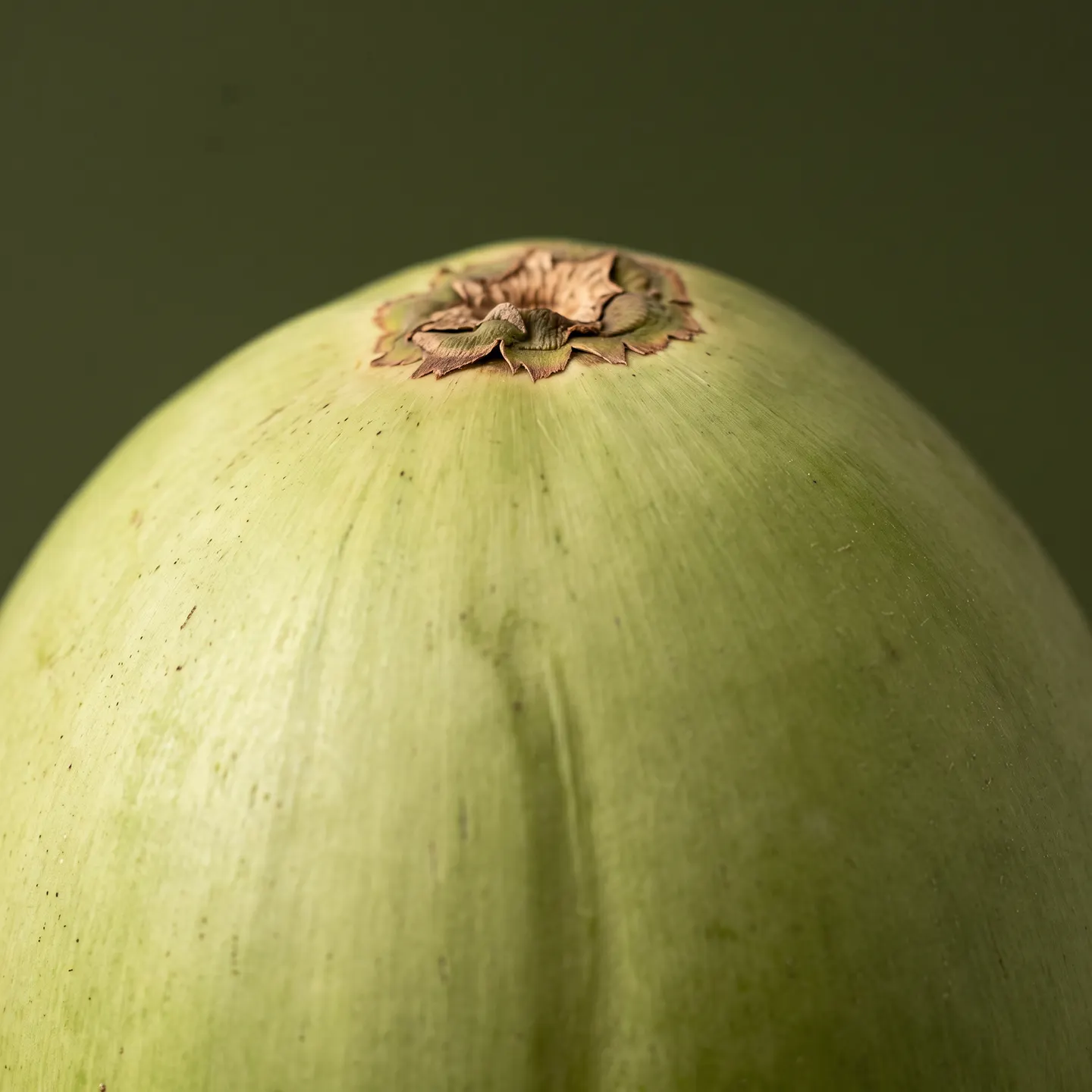
The dry sepals on top, arranged in a star, mark where the fruit was attached to the bunch.
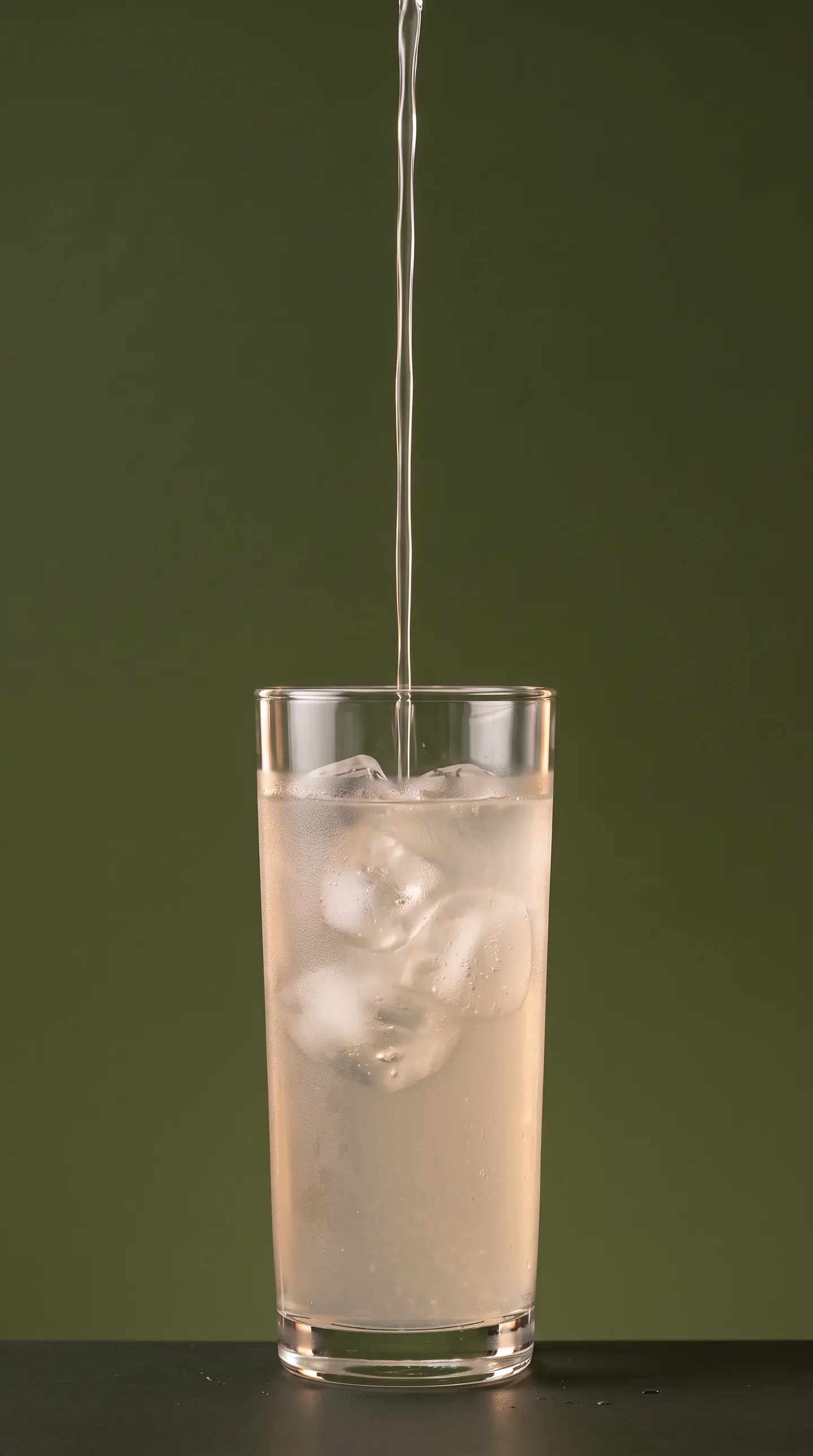
Measured quality
Caring for every step only makes sense if the result can be verified. That is why the coconut is evaluated on two laboratory parameters: soluble solids in the water, in °Brix, and sensory acceptance, on the hedonic scale from 1 to 9.
Degrees Brix indicate the amount of dissolved solids in the water, largely natural sugars. The higher the value, the sweeter the coconut water.
The hedonic scale measures sensory acceptance. Panelists taste the product and score it from 1 to 9: 1 means dislike extremely; 9, like extremely. It is the number that shows how well the product is liked.
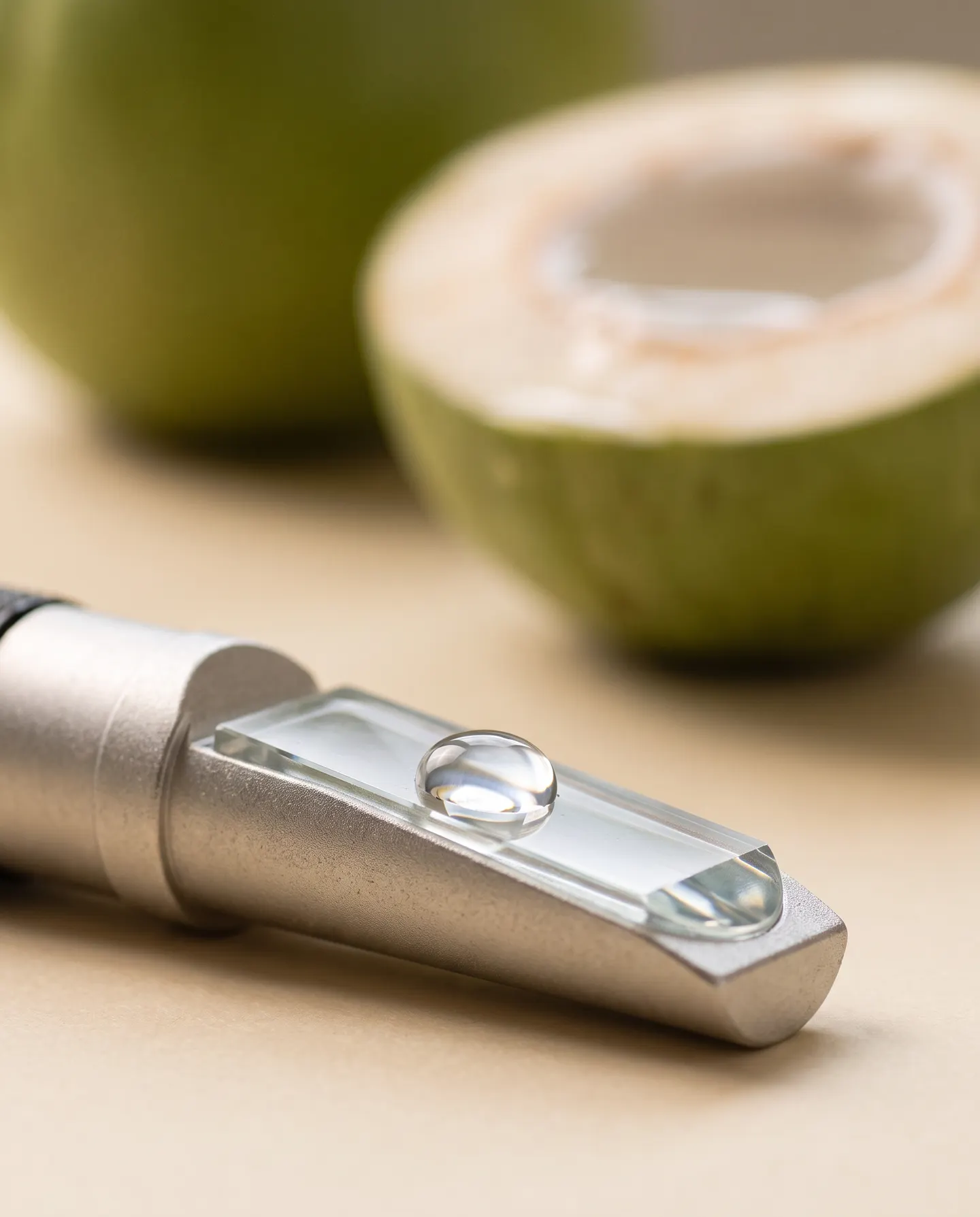
W&J Agro's results are close to the top score on both parameters.
Yield per mature coconut
600–700 ml
A mature coconut yields 600 to 700 ml of water: a fruit picked at its peak and transported without cracking, with all the water it produced. For anyone bottling or serving it, a predictable yield per fruit.
Who we supply
The order changes with the buyer's profile: volume resale, industrial processing or supplying stores and kitchens. The product, the origin and the selection standard are the same.
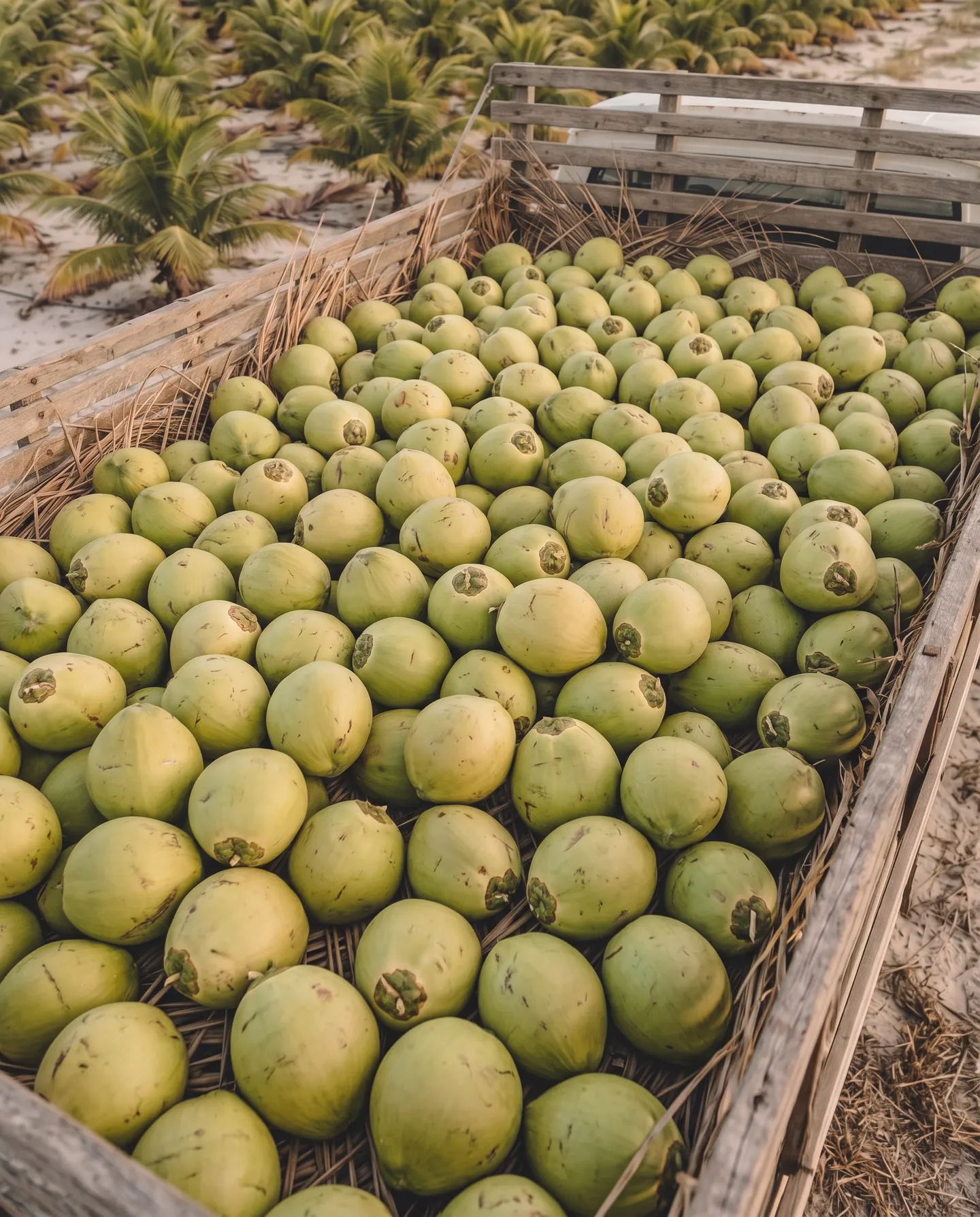
01
Fresh green and mature coconut in volume for resale, with controlled origin and selection by size and appearance. A supplier that grows and harvests what it delivers.
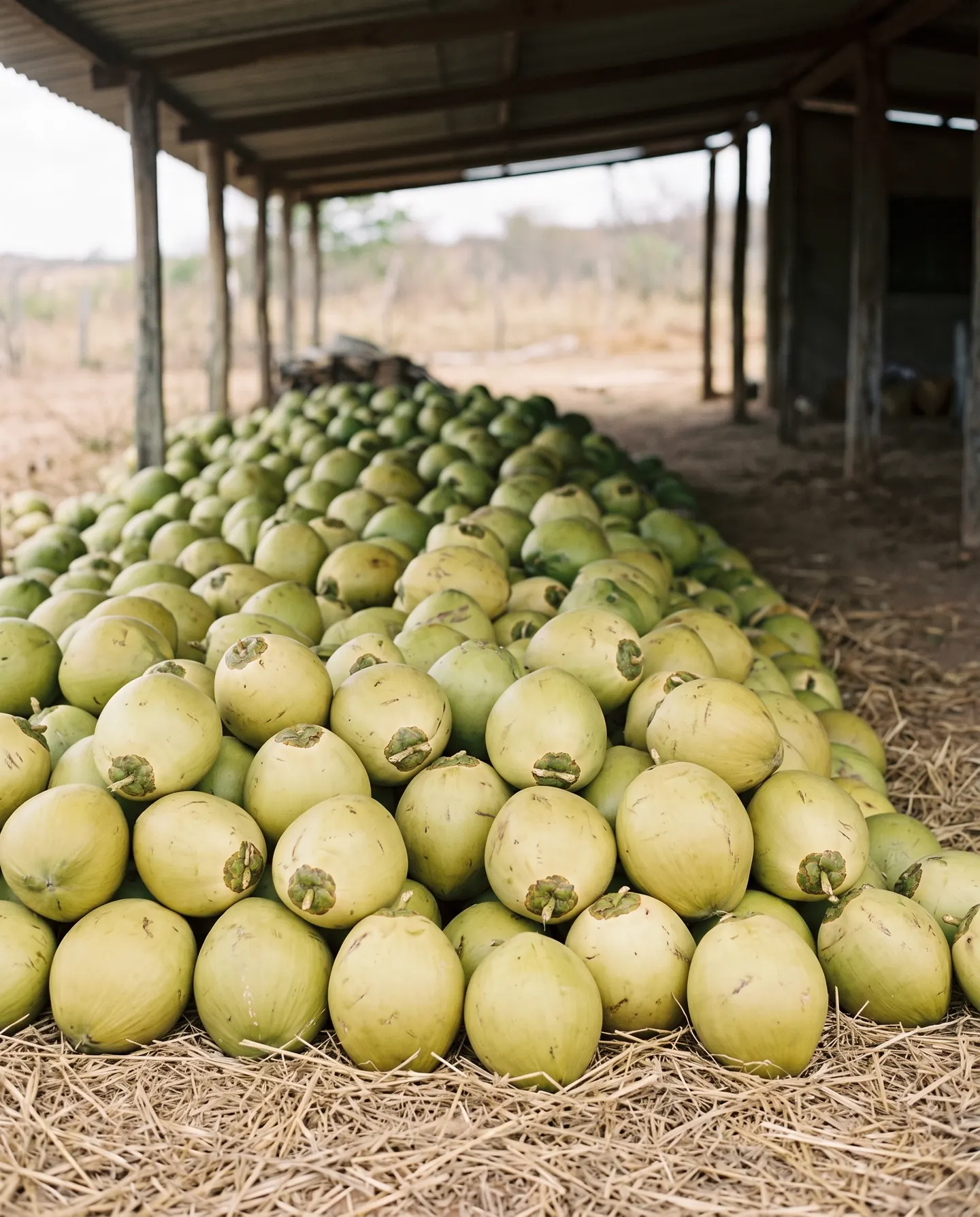
02
Mature coconut at its peak, with 600 to 700 ml of water per fruit and lab-measured °Brix, for coconut water bottling. Whole fruit for other processes.
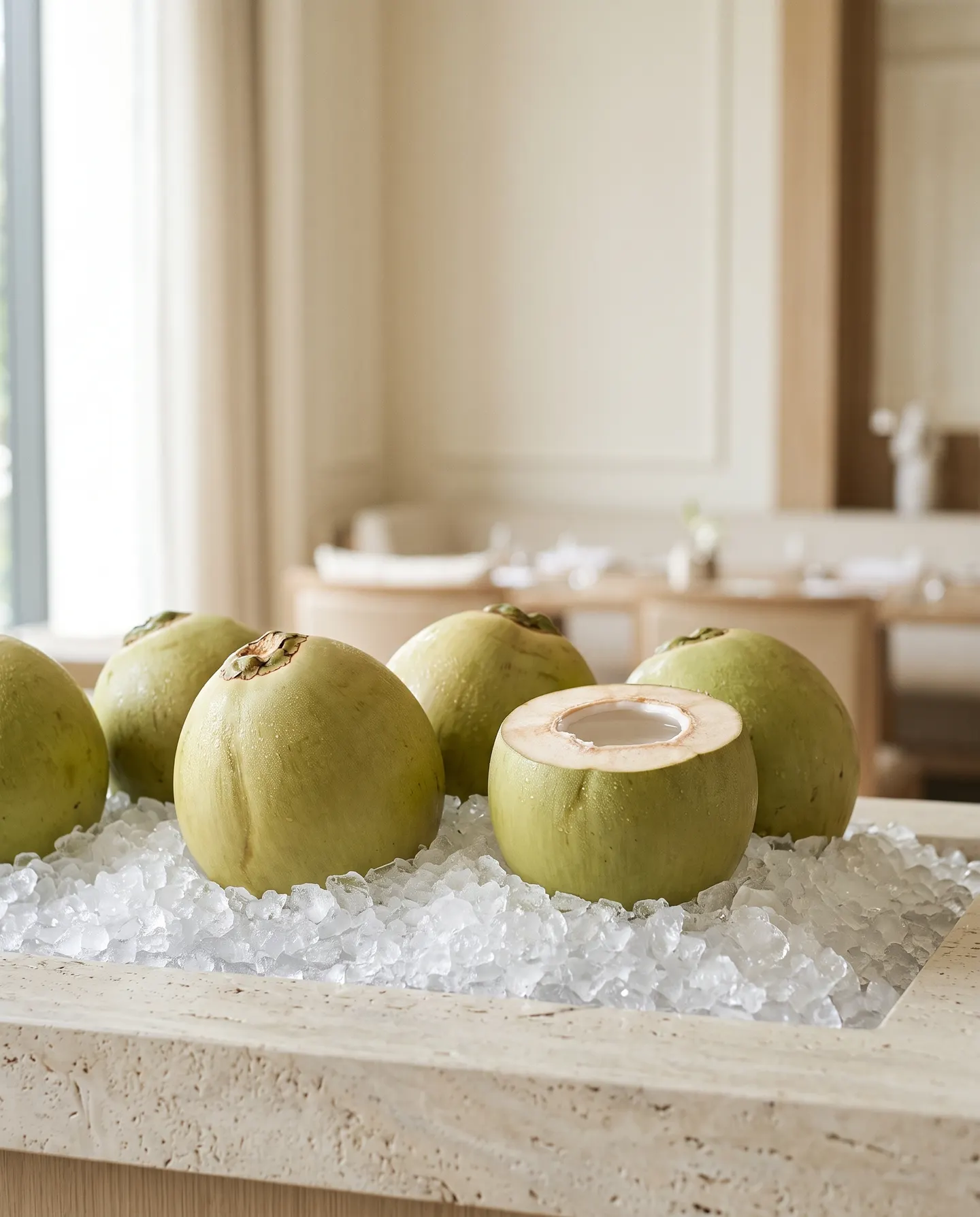
03
Green and mature coconut for supermarkets, retail chains, hotels, restaurants and kiosks. Selection by size and appearance, and raffia sacks for smaller orders.
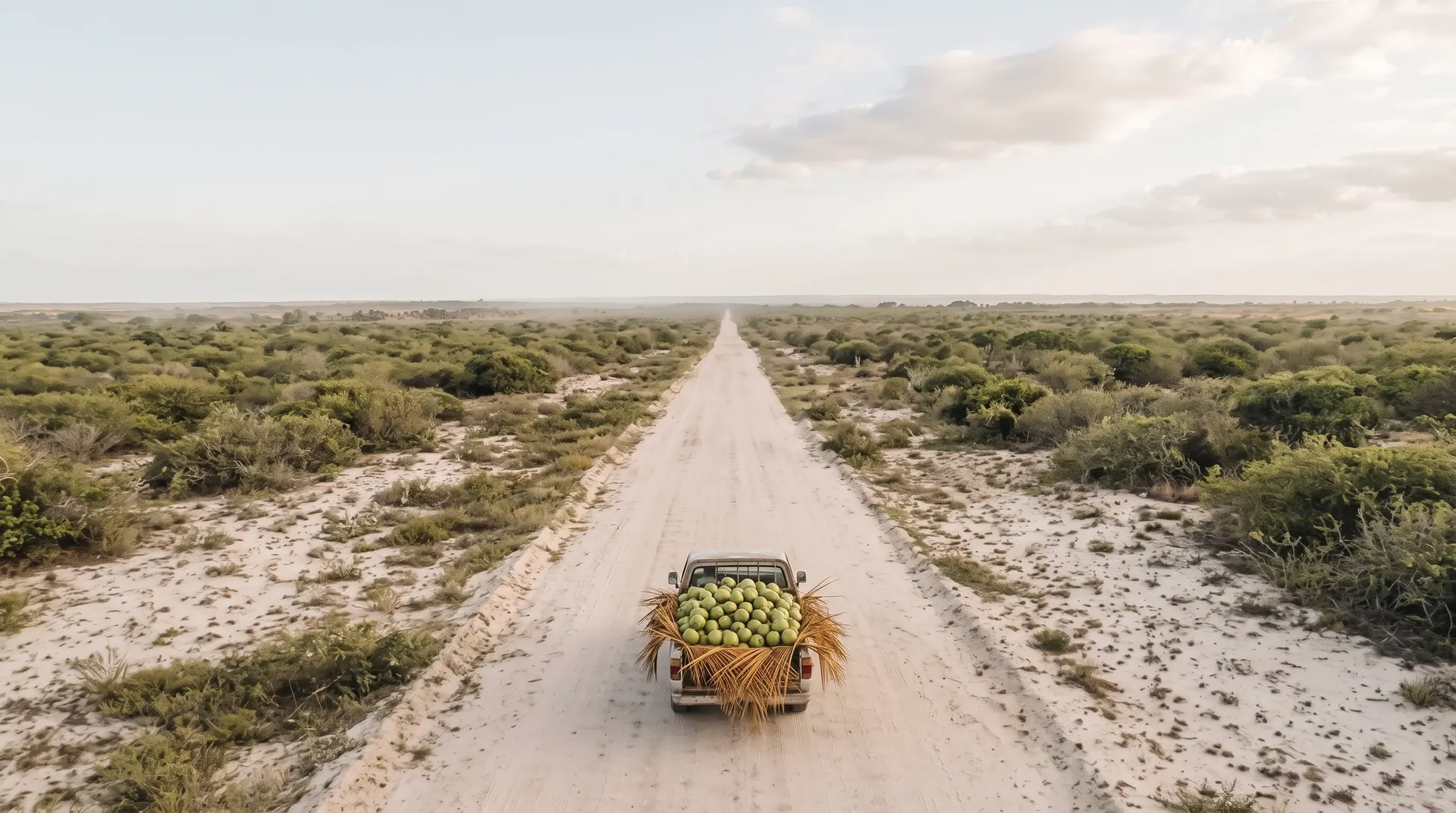
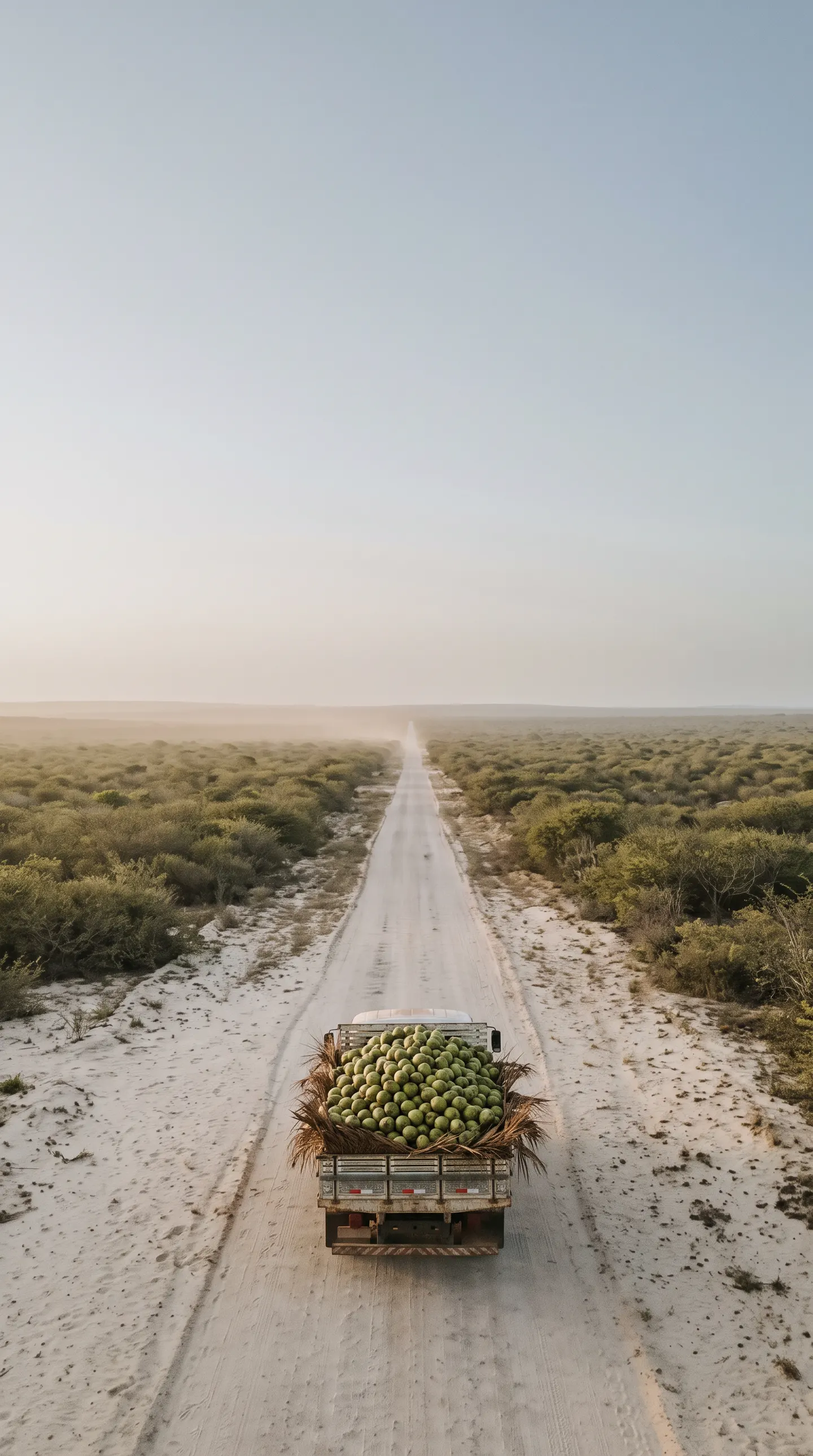
The farms are in Russas - CE, and W&J Agro has the capacity to serve all of Brazil.
On the farms
Tell us the coconut type, volume, frequency and delivery city. W&J Agro's sales team replies on WhatsApp.